Wednesday, May 19, 2010

Bohol Island Day 1-3 (May 15-17, 2010) Part 2

From island hopping, we went inland to discover more of Bohol's splendor. The day's itinerary were as follows: Tarsier, Chocolate Hills, Man-Made Forest between Bilar and Loboc, Floating Restaurant on the Loboc River, Baclayon Church and the shrine of Pacto de Sangre.


It was a long drive inland but leisurely and relaxing. Our first stop was the Tarsier zoo. Finally I saw them, live! They were so small indeed. They clung to the branches in huddled repose, eyes wide and bulging, fingers wrapped securely on a tree branch.


Dianne and I said our goodbyes to the tarsiers. Mang Jerry our driver and tour guide of the day, brought us to Chocolate Hills. The road was paved but windy. It sort of reminded me of Baguio because there were big boulders that flank the road left and right. According to Mang Jerry, Bohol rose up from the bottom of the sea. That's not impossible as all islands are volcanic and most are formed under the sea where forces of water, air, fire and earth combine. See how magnificent this universe is!


It's no wonder that the Chocolate Hills were formed. It's nature's way of having fun, really. Just imagine if these hills developed into mountains, then, there would have been a mountain range in the Visayas. But no. The universe did not allow it. So now we had a wonder of the world to behold. The hills do look like chocolates as the foliage turns brown in the sun. Dianne was thinking, how come there were no chocolates for sale around? Peanut kisses were a plenty. Perhaps it's time to make a choco-peanut variant as homage to the Chocolate Hills.


Next stop was the Butterfly Sanctuary at Bilar. We were entertained by Jobert, the guide there who gave us an amusing tour of the place. The butterflies were beautiful. All butterflies in the garden are endemic to Bohol.

On our way down to Loboc, we passed by the Man Made Forest which is five hectares wide. Mahogany trees were planted by students of the Holy Name School of Bohol. They've been doing this for forty years! Dianne was reminded of the US when we stopped for a short while to take pictures. It was a cool spot.


We drove further down to Loboc River to have lunch at the Floating Resto. It comes with a singer cum guitarist. There was a part where the raft paused so that guests and tourist would be entertained by local community for some singing, dancing and banduria serenade. The whole community of Brgy. Gotozon did a fantastic job at performing traditional dances. I have not seen folk dancers do the tinikling since I was a kid. Bravo!


The final leg of the journey was the Baclayon Church and Museum. It is the second oldest church in the Philippines. The Jesuit fathers built it in 1727 out of wood. In time, the Augustinian Recollects took over and renovated the church in to its current state. It's made of coral stones taken from the sea. The adjoining museum is another interesting site and sight. I could not say they're doing a great job at preservation and conservation efforts though. The church was named a national historic site in 1994. With a flourishing tourism trade, the Baclayon municipal government or the LGU of Bohol could at least find ways to finance its restoration, especially the artifacts that has been corroded by the salty sea air. It doesn't help that Baclayon Church faces the sea.


Speaking of care and respect for historical sites, Filipinos need to be educated on this matter. I am embarrassed at the lack of historical pride and cultural appreciation among my country men. Napoleon Abueva, National Artist, made the sculpture of Pacto de Sangre, the one that stands in front of Baclayon Church. Abueva based his work form another master, Juan Luna, who painted the Pacto de Sangre when he was in sojourn in Europe. Tourists would climb up the sculptures and pose wacky faces between Urdaneta and Legaspi. I did not see any foreigner doing so, just Pinoys.


Despite this, the tours and sight seeing in Loboc, Baclayon, Bilar and Carmen were highly educational and leisurely. Now I've so much to share to my own children, the kids I teach and the colleagues I interact with. From mountain to sea, there are so many things that bind these archipelago together - love for family, generosity, simplicity...and a need to know more deeply beauty of these islands.

Tuesday, May 18, 2010

Bohol Island Day 1-3 (May 15-17, 2010) Part 1

A day after the Sagada adventure, Dianne and I had a day's respite with our respective family and friends. It was an opportune time to sort out stuff and things needed for the next leg of the journey -- Bohol! From the mountains of Luzon, we headed down south to the seas of the Visayas. We reached Tagbilaran on Saturday morning, May 15, 2010. The sun was shinning, the sky so blue and the sea! It glimmers and glistens. In thirty minutes, we were at Alona Pyramid Resort. It was a striking contrast to our Sagada days yet, we were welcomed with the same friendly smiles and warm greetings from the locals. These islands are as diverse and varied as a jar of jelly bean candies but each is flavored with a delightful sweet taste.


We took it easy the first day and decided to go island hopping and sight seeing the next day. Dianne hired a bangka so we could see the dolphins and snorkel. At 7.30AM we were out in the open sea. Once in the middle of the sea, the dolphins made their appearance. They were so fast! You have to carefully watch for them for they disappear too soon. After a few rounds, we headed to the island of Balicasag for some snorkeling.


A starfish I found on the shore of Balicasag. I threw it back to the sea where it belongs.

My first snorkeling experience was a disaster. In Balicasag, we were blessed with a competent guide, Sinio, who taught me how to use the snorkeling gear first. On the small bangka, he gave me instructions on how to use it; made me breath using the tube before going down to the reefs. Dianne was a snorkeling pro. Growing up in Hawaii sure has great advantages.

With the help of my life vest and Sinio's assuring words, I was snorkeling in no time. He allowed me to hold his hand as he led me to the rope that marks the drop off - the end of the coral reef. It was awesome! The reef was teeming with marine life. There were parrot fishes, blue devil fishes, clown fishes (Nemo) butterfly fishes and small yellow fishes that come near snorkelers. I was up close and personal with nature once again. I thank God for giving me this life and this wonderful world!


Once the snorkeling was over, we headed to the island to rest before going to another. There at Balicasag, Dianne met some local islanders selling jewelry. It was the children who were more than endearing. For a few minutes, Dianne played with them and told them stories. Too bad, we had to leave for Putod island. At Putod, we met vacationers too - a Polish couple, Pinoy balikbayans and their friends from Siliman University. They were having a grand time as well.

By lunch time, we headed back to Panglao island. We set up our laptops at the resto to work. Yes, it's a working vacation. We have a book to plan, write and finish. The moment was perfect to note observations and list down insights. All these will fuel inspiration for Tales From the 7,000 Isles: Filipino Folk Stories!

Sagada (Day 3)- Conquering the Sumag-ing Cave

The third and last day of our Sagada adventure began as early as 7.30 AM when, after breakfast, we met Mang Jimmy, our guide from the Fidelisan trek. He was our guide for the day in the caves. The Sumag-ing Cave is the easiest cave to explore according to the Tourism Officer. It's what they recommend for first timers in Sagada because it was a cave that could be conquered by city people like us.

He was kidding us! Just when we thought that the Fidelisan and Bomod-ok Falls trekking was an adventure of a lifetime, the Sumag-ing caving experience made us hang on to dear life. Imagine going into a primeval cave with nothing but nervous excitement! The caving in Sumag-ing was an adventure like no other.


Apart from Mang Jimmy, Inug-ay, another guide for the caving tour, assisted us, Team Sagada. By now, we were at home with Mang Jimmy and his uncanny sense of humor. He is no match for Dianne though, who topped his every teasing with a joke or two of her own. Needless to say, it was a fun and fearless caving expedition. I have to say, Team Sagada is made up of go-getters and non-quitters. So, as we all groped in the dark, bending, kneeling, creeping, groping on rocks smudged with bat's dung, we have enough courage and the will to go on and to let go of our fears.


L-R Dianne, me, Lucky Galvez, Ailen Claudio, Jerome Ramirez, Jovel Lopez and Yumi Pitargue. Go, Team Sagada!

Such was the bravery of the "bagets" as they exchange humorous tirades at each other and played word games that kept us all amused despite the darkness that surrounded us. If the Mang Jimmy - Dianne de Las Casas battle of the wits was a show of their own, Lucky and Jerome were in a word war as they descended the cave. They dished out "cave" words at each other. Cavernous. Creepy. It was very entertaining. When we reached the drop off, we all needed to go down a knotted rope. Mang Jimmy deftly showed us how. We followed like dutiful students. The reward, more stalagmites and stalactites; fossils on the cave walls and the cold gushing water!


By this time we were already barefoot. We took off our footwear so we could use our feet better. The soles of our flip flops and sneakers were liable to slips and falls. On the second drop off, we had to step on our guides' knee to go down. Holding Mang Jimmy's hands and stepping on his knee was an embarrassing moment. If only I was twenty lbs. lighter! My insecurity radiated to other members of the team that slipping a few steps was inevitable. To this, Yumi simply said, It's not too bad to die in a bikini .


When we reached the dead end, we were simply thankful for surviving the way down. The way up was another story. But what was there to fear? Going up was not as bad as the trip down. Really.


We had guides who were experts. They know Sumag-ing like the back of their hands. I give credit to Mang Jimmy and Inug-ay for a job well done; for keeping us safe; for showing the way; for holding up the light and placing them on areas that made us see the beauty of the cave; for their patience and sense of humor. To the guides, Mang Jimmy and Inug-ay, thank you! Thank you! Thank you for leading us back to the mouth of the cave alive and enlightened.

On our way back to the poblacion, we dropped by a road where a cliff holds three hanging coffins. We went down a mountain side one more time to see the burial caves. Then we rushed to our lodgings for a quick shower. We had to catch the 1PM bus ride back to Baguio. Most of us needed to be back in Manila the following day.

I have to say that the two nights three days stay in Sagada was an adventure of a lifetime indeed. I got in touch with the Igorot in me. I'm Ibanag, but I've always been in awe of them. My respects for the Igorots and their kin increased a hundred fold. To the Igorots who are very much a part of the Filipino culture and history, I derive inspiration from your ingenuity, inventiveness and resiliency. I live in a beautiful country!

The Ganduyan* Museum in Sagada

It was in the late afternoon when I found myself looking for Christina Aben of the Ganduyan Museum. I was expecting to meet a young woman in her early thirties or forties. Instead, I met a wizened Igorot woman who spoke impeccable English.

Ms. Aben is the collector and oral curator of "everything" inside the Ganduyan Museum. She led me to the stairs and at the foot of it, we took off our shoes. We entered sacred ground. What greeted me was a room full of artifacts from the Cordilleras. It was awesome!

Ms. Aben began with her bead collection. These are her own collection which she started in the 1970s. The beads came from the lowlands at a time when the Igorots traded with outsiders and foreigners like the Chinese, the Indians and the Arabs. There were alligator teeth and mother of pearl shells in her collection. Such things were not found in the Cordilleras. She has a money belt, a warrior's purse and all sorts of beaded necklaces from different tribal groups of the Cordilleras. There I learned that beading patterns differ from one ethnic tribe to another. One could tell who's from the Kalinga, Nabaloi, Ifugao or Igorot. We moved on down to the men's accessories. From pipes to caps (used as pillow and water cup) and woven g-strings, anklets and armlets to warrior's garb, she has it on display. Most intriguing to me are the amulets and snake vertebra believed to increase the warrior's physical and internal prowess.

The display of spoons and drinking cups for wine are varied in size and kind. Men and women drink. For a man who has cheated on his wife, the wine cup is passed behind his back. When this happens, the cheating husband is kept away from the wife to be cleansed by the shaman. How the cleansing was done, I failed to ask. Next time, I will and yes, I'll blog about it.

For the Igorots, status are issues they treat with utmost importance. There are clothing that the rich could wear but the poor could not. The kitchenware were made from wood and metal, some from animal bones. But these are also classified by social class. Prince or pauper, the tribal Igorot does not wash their plates. Kamote, which is the staple food of the highlanders, atsara, meat and fish dishes were served on plates but the left overs, grease and stain from these viands and food were scraped. Washing was unheard of because of the scarcity of water. Water from the well was a precious resource meant for drinking, cooking and other activities for sustenance.

The divide between the affluent and the indigent persisted among ethnic tribes, however, in this modern times, these belief system no longer matter. Then again, in death, this division in social classes is still observed.

The Igorots hold many beliefs and symbols. Among the many, it is the lizard or the gecko that stand out. These animals bring forth luck and longevity. Doors, scarves, table runners, accessories are decorated with these cold blooded insectivores. Even the warrior's shield has a gecko or two. What I found most interesting among the many weapons on display is the concave end of the shields. It is meant to trap the enemy at the neck. Then, the warrior goes for the kill by chopping his head off. There goes the fabled head hunters of the Cordilleras.

For a typical city slicker, the whole thing would appear primitive or simply a mere memory of the Cordillera's pagan past. But for me, a city slicker, the Ganduyan Museum's collection and exhibit is a testimony to a unique but dying heritage that is a part of these islands. All seven thousand seven hundred of them!

At the end of the lecture, Ms. Aben shared that the museum is her life's passion. A cancer survivor, she has pursued the arts and is continuously doing so. Hats off to people like her. Long live the Ganduyan Museum!


*Ganduyan is the Igorot name of Sagada

Monday, May 17, 2010

Sagada (Day 2)-Fidelisan Rice Terraces & Bomod-ok Falls

I got a better look of the poblacion in the morning - the parish office and church, St. Theodore’s hospital, the souvenir shops, the surrounding mountains, the halo-halo stand and the local people. It was a bright and sunny day. We were ready to trek Fidelisan for Bomo-dok Falls.


For an affordable fee of Php 1,250.00, we hired a van and a guide to trek down the Fidelisan rice terraces and to bathe in the pools of Bom-odok Falls. Excitement was in the air. Dianne was wearing his hiking sneakers. She brought along a walking stick and wide brimmed hat. I have my camera ready.

The city people that we are, we were so cocky! Mang Jimmy, our guide, showed us the three-kilometer trek from the top of a viewing point. Yeah, we tell him. We can do that. And we did!

We crossed the rice terraces down winding paths and rocky terrain. The view of the mountain was fantastic. Clouds hover above us. The sky was so blue under our heads. The landscape magnified our irrelevance. Man is but a speck in the vast universe and he is free to do what he pleases in it. The rice terraces are truly a wonder of the world! The red earth and the palay that grows on them are firmly held on by rocks at the edge to prevent erosion. According to Mang Jimmy, the rice terraces in Banawe do not have such support. The Mountain Province terraces are sturdier than the Ifugao counterpart. With rocks or none at all, this Igorot invention and ingenuity is unparalleled. Though rice terraces can be found in Vietnam, China and Japan ours flourish on the rocky mountainside.

Contrary to textbook information, rice is not the only crop that grows on the terraces. Kamote, cassava, cabbage and lettuce are planted year round along with other root crops. I read somewhere that natural irrigation, rain and spring water keep the rice terraces green and growing. The rain that prevented us from caving and trekking yesterday was proof. The natural spring water that gushes out the mountainside was another. There were plenty! And what musical sounds they make! The Fidelisan rice terraces were so alive! Half way down the terraces, we met kids who ran ahead of us on the steep path like mountain goats. They were barefoot and nimble. Such was their friendliness to tourists and strangers that Yumi, one of our companions, befriended a few and took pictures of them. They made the tiring and challenging trek to Bomod-ok Falls fun and playful.

Along the way, carabaos graze on a grassy field by a stream and pools of water litter our path left and right. Little fishes, minnows, I’d like to think, and tadpoles swim in their small watery world. Then we heard the gushing of strong water. We were a few meters away from Bomod-ok Falls. Finally, we saw it. The Big Falls that the Tourism Officer recommended for us to see. It was not Niagra, but it was majestic in its own right. The force of the water was overwhelming. The current down river was strong so we selected pools and spots to dip in. Our cameras were on hand for photos to put in our Facebook accounts.

It was refreshing to be there. I sat between two rocks and allowed the water to massage my aching back. Heaven! Dianne swam in the pool and played with the kids we met earlier. She played ‘Nanay – Tatay’ with the boys. In return, she taught them ‘Peanut Butter and Jelly Jam’. Mang Jimmy, our guide left us to enjoy the afternoon. Our companions, Yumi, Jovel, Lucky, Ailen and Jerome took pictures and waded in the cool shallow waters. After an hour, we headed back to the poblacion. The trek going back was double the challenge! Yet, we made it.

Lunch that late afternoon was at Grandma’s Yellow House. We met an Igorot woman by the name of Lilian on our way there. She carried a clump of kamote vines on top of her head. She gathers, plants and sells them at the market place. If the harvest is good, she goes down to Baguio to sell more. We invited her for lunch. She declined, but we insisted. It is typical in the province that everyone is a relative to another. Lola Lilian is the perfect example. She met her grandson (twice removed) at the restaurant and her nephew by the automotive shop. Over tea (mountain tea), I asked if she told any stories to her fifty grand children. She nodded her head but could not remember or share any. Perhaps the language was a barrier. I'm not H. Otley Beyer who lived among the Ifugaos for sixty years. Beyer was an Americam anthropologist who studied and wrote about the mountain people’s way of life, customs, rituals and traditions. He included folklore collected from the locals. Sadly, his writings are in a repository somewhere in a big university in Australia.


While the “bagets” headed back to the rest house, Dianne and I continued exploring the poblacion. She went to St. Mary’s Parish and did her own research. I went to the Ganduyan Museum. Having met Dean Bocobo, the writer and scholar from Manila earlier that morning I heeded his advice to see Christina Aben of the Ganduyan Museum.

Sunday, May 16, 2010

Paglaki Ko Gusto Ko Maging Manunulat o Illustrador ng Kabataan

The Paglaki Ko Gusto Ko Maging Manunulat o Illustrador ng Kabataan Room (When I grow Up I Want to be a Writer or Illustrator for Children) of the Museo Pambata gets good PR. Read it here. Ronald Lim did a good job on writing the piece.

Saturday, May 15, 2010

Sagada (Day 1)

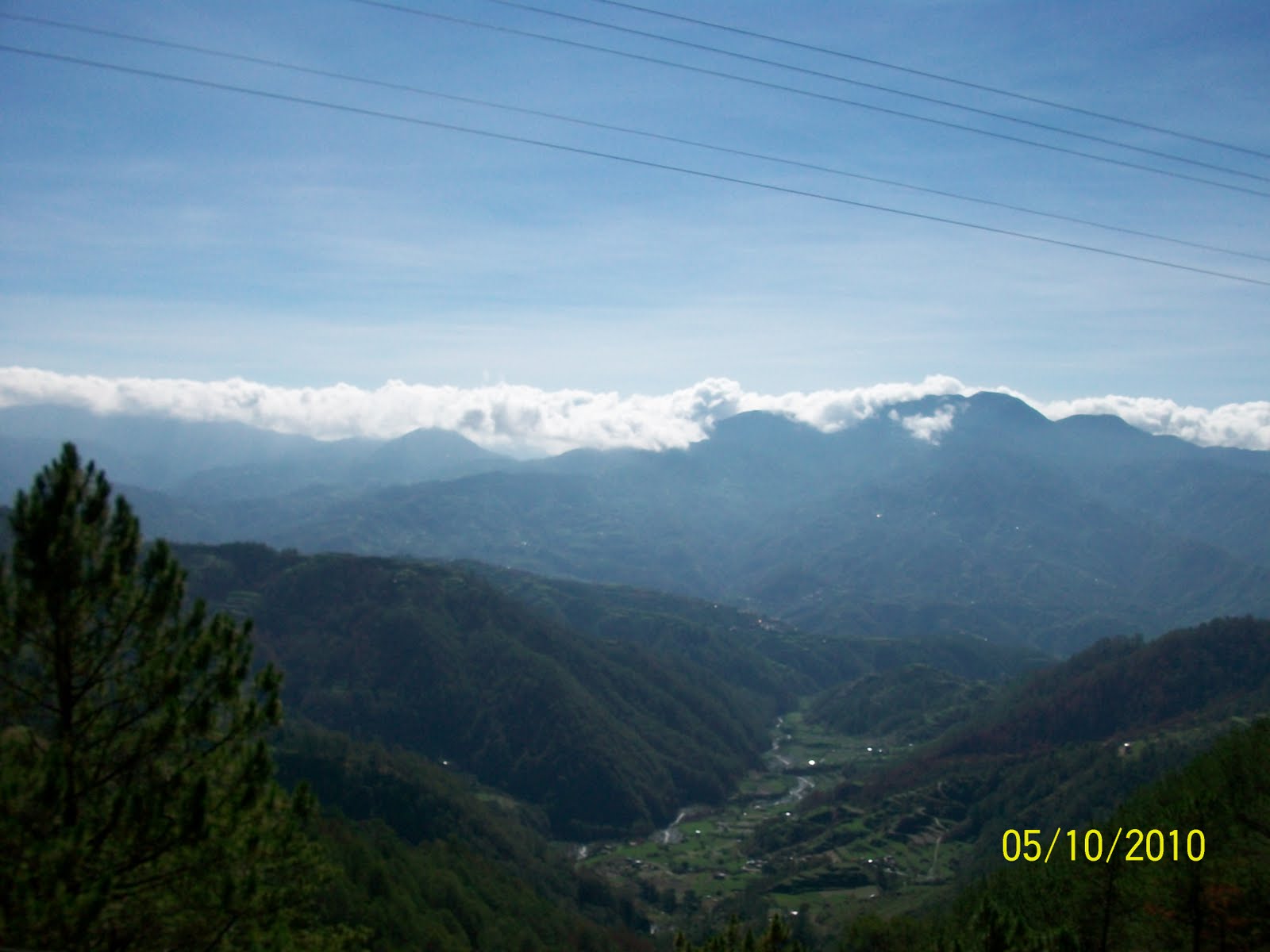
The roads to Sagada are winding and treacherous. If not for the breathtaking landscapes and the beautiful rice terraces the six-hour road trip from Baguio to Sagada would have been uneventful. Dianne and I snapped pictures all the time. We got great shots! But, that was just the beginning of our Sagada adventure.

Upon arrival at the poblacion, we immediately met Manang Julia, the landlady at St. Joseph’s Resthouse. She’s such an easy person to talk to. She gave us great discount to our lodgings as well. Thanks to Roderick Ramos, my friend and colleague, who inspired me to go to Sagada with Dianne in the first place.


There were seven of us city slickers, six from Manila and one from New Orleans. We were tourists in a place where time moved in slow motion. No rush. No hurry. It was so easy to tell us apart, what with Dianne and her strong American features standing out the locals looked and wondered. Then, with a knowing smile, we were labeled in their eyes – lowlanders. Yes, the Sagadians were a friendly lot but they keep a certain distance from new comers. We were welcomed and were treated rightfully though. Then again, I could not help but feel like a stranger in my own country.


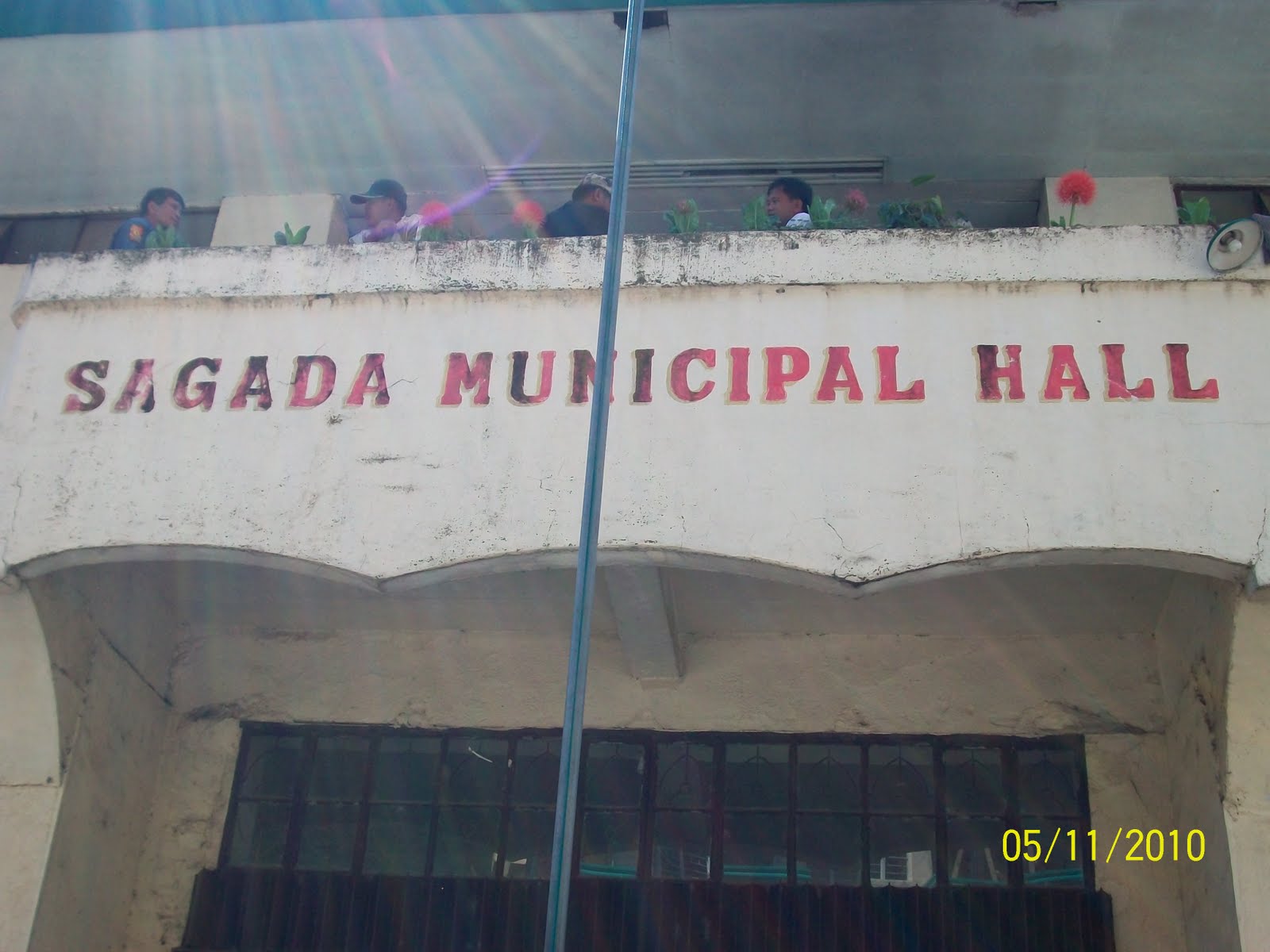
At the municipal hall, we talked to the assigned personnel at the information center for tours and registration duties. A minimal fee is needed to do this – only 20 pesos and you could pick your choice of Sagada adventure. While the idea of trekking, caving and seeing the sights fermented in our minds, our stomachs got the better of us. So, we headed to the nearby Masferre Café for a late lunch. The restaurant is family owned. Eduardo Masferre is a Spanish Mestizo known for his photographic art of the Cordillera people. His photos chronicled and depicted the Cordillera way of life and culture. What could not be described in words, Masferre captured in photos. Some of his photos were exhibited on one wall for costumers to look and see while waiting to be served. His son, the youngest (I think) manages the restaurant. Patricia Masferre, granddaughter of the master, waited and served us lunch.

It must be the twelve-hour bus ride, the sleepy mood that enveloped the locality and the long wait for lunch that made us lethargic. We canceled the afternoon’s activity for a few hours of rest. We wanted to hit the caves in the late afternoon but a downpour kept us in our rooms. Dinner was at Café St. Joe. The cold climate made me order another mug of mountain tea. This became my staple drink in our three days and two nights stay in Sagada. I was not the only one who fell in love with the tea. My companions bought dozens of mountain tea packs for home and pasalubong.

Monday, May 10, 2010

Updates on Tales From the 7,000 Isles Book Project

Dianne de Las Casas is in town for a series of workshops. Scholastic Philippines sponsored her five workshops in Bulacan, Batangas and Manila. All were smash hits!


We're off to Sagada tonight for research and folk lore collection on the book we're putting together. Then we'll fly to Bohol in the Visayas island for more research. And a bit of sea, sun and sand.

Sunday, May 9, 2010

Saturday, May 8, 2010

Author of the Month: Astrid Tobias

On May 9, 2010 a good friend of mine is celebrating her birthday in heaven. Astrid Tobias, writer and life's consummate lover is SLIA's Author of the Month. Liwliwa Malabed, our common friend, shares these wonderful memories of Astrid. She also did this beautiful portrait of her.

Astrid is a Salanga Prize winner and Palanca Awardee. She has left a handful of storybooks, media projects and a host of advocacy in culture and the arts.

Recall the first time you met her.
Yikes. I didn't like Astrid the first time we talked (but I did like her hoodie jacket with ears!) around 9 yrs ago. She asked me a question and I was still answering her first question when she launched in to another question! Then when i tried to answer her second question, she turned to another writer in our office (Agay, I think) and she talked to her instead! Hahaha. Yan, ADHD nga.

How well do you know Astrid as a writer/author? You may discuss her writing style, the creative process she underwent, her craft and choice of themes in writing stories for children.
She can come up with wonderful stories overnight. When I told her that her story (MALANG) was chosen for the Crucible project, she was so surprised because she just wrote it overnight!


What's your favorite Astrid Tobias story? Please explain.

Bayong ng Kuting. Kasi KUTING. Two years ago, Astrid and I were in Pililia, Rizal for a training. We saw three black kittens abandoned by their mother and we decided to take them home. In the process of putting them in the box, Astrid was bitten by one of the kittens. The story Ang Bayong ng Kuting reminds me of THIS story.

What do you think is Astrid's greatest contribution to Philippine Children's Literature? Or what legacy did she leave us - colleagues and friends in the industry?
Astrid was always in a hurry and when she left, we understood why. She made us take a look at our life and go do things we've always wanted. To quote her: Gogogo!

In Children's Literature, aside from KUTING, she also worked for children's media where kids write, produce and direct. She held workshops all over the country, teaching kids how to use the video camera.


How can we, in the industry, keep Astrid's memory alive?

Keep writing, and maybe teach kids what we know. Hold workshops for them.


Any message you wish to say or give her?

Hay. I'm thankful for the last two years I shared closely with her. To my headhunter and go-getter: bitin pa ako (I want more), but I'm happy with all those moments (pig-out moments, massage+obernyt-kina-danggit moments, ukay moments, planning world domination moments). I'm trying to gogogo, instead of tsakana (later on) and next time!

*Art Angel, a TV show for kids, will air Astrid's story Bayong ng Kuting today at 9AM.

Friday, May 7, 2010

Librarian on School Tour

Apart from writing folk stories for Tales From the 7,000 Isles, I had the great opportunity of visiting schools over the past couple of weeks. I did workshops and training sessions to teachers in preschool, grade school to high school.

At The Raya School, I gave a session on evaluating and enjoying children's books. The module I made for them was entitled Bravo! Books! where in teachers immersed themselves in local and foreig picture books and chapter books for kids and teens. The reading influences of the Raya teachers are impressive. Collectively, they grew up in a print rich environment where books were accessible to them as well. The challenge now is for them to be more conscious in making better choices on books to use in the classroom.

Last Thursday I gave a Library Open House for grade school and high school teachers of St. Mary's Angel's School of Valenzuela. The library was set up like a "tiange" where teachers browsed through the resources available for their use in teaching and instruction. But before they perused the resources available to them, I provided input on the role of the library and the librarian in their lives as teachers.

Before the month ends, I'll be in Teacher Tin Canon's school in Merville, Paranaque to give a creativity workshop for her teachers. For interested schools and institutions on the workshops that I do, you can get in touch with me via email - zarah.gagatiga@gmail.com.

Wednesday, May 5, 2010

Call for Manuscripts: Adarna House Line-Up for 2010

From the Adarna House email network --

We are looking for manuscripts to complete our line-up for 2011. We welcome stories of any topic, but are currently particularly interested in storybook manuscripts that deal with math, reading, health, environmental awareness, legends, heroes, historical events, special topics (death, peace, adoption, autism, children's rights), and Filipino values (love of country, pagmamano, po at opo, colonial mentality, and value of freedom, language, culture, and history).

Submit three (3) copies of your original manuscript typewritten on short bond paper accompanied by a one-page literary bio-data. On the first page of the manuscript, indicate its genre (short story, nonfiction, poetry, etc.) and the literary contest/s it has won, if any.

Address your submissions to Ani Almario, Product Development Manager, ADARNA HOUSE, 2/F FSS Bldg., 20 Scout Tuason cor. Scout Castor Sts., Brgy. Laging Handa, Quezon City 1103. Submissions have to be accompanied by a self-addressed, self-stamped envelope to facilitate return after being screened. Manuscripts may be dropped off at our showroom, or sent through post. No manuscript submissions may be sent over e-mail.

Tuesday, May 4, 2010

Dianne De Las Casas Live in Manila


Learn the craft of storytelling from one of the award-winning professional storytellers in the US and a book author too!

Scholastic brings you Dianne de Las Casas on a limited engagement on the following dates:

May 5 (St. Paul College Bocaue, Bulacan)
May 6 (Canossa Academy Lipa, Batangas)
May 7 (Development Academy of the Philippines, Ortigas Center, Pasig City)

Time: 7:30 am to 12 nonn
Registration Fee : 50% discount or P650.00 per participant only for Scholastic partner schools. Regular fee is P1,300 which includes handouts, books and snacks.

To register, call us at 900-1537 or 628-4487. Hurry! Limited seats only.

To know more about Dianne, visit www.storyconnection.net.

Invite your friends too!

Monday, May 3, 2010

Dear Librarian: SLIA's REPLY for Making the Right Decion

Here's my take on Confused Freshman's dilemma. Prof. Cabbab gave his piece of advice in a previous post.

Dear Confused Freshman,

LIS was not my first choice of a college degree. I wanted to major in English under the Bachelor of Secondary Education program at the Philippine Normal University. It was my mother who convinced me to take up LIS instead because, very few major in the discipline. It meant that I have little competition and bigger chances to get a job. She was right.

I love books. I love reading. I love being and socializing with people. If you, like me, have an affinity for all three – books, reading and people, then that’s a good start to base your choice in transferring to LIS. Other than these, LIS could offer you the following jobs or possibilities after graduation.

a. You can work as a librarian in a school, college, university, corporate and/or government agency.
b. You can take on a job as an IT specialist.
c. You can be a content developer.
d. You can work in a publishing house as indexer, abstracter or a subject specialist who prepares bibliographies and thesauri.
e. You can be an archivist and work along side historians and researchers


The good thing is, you can be anyone of the afore mentioned professionals here or abroad. Yes, LIS professionals are WANTED in the Philippines and the world.

As for your study habits, I think this is an area you need to improve on. I further suggest that you take some test on your learning styles and modalities so that you would know how to conquer your weakness of late submissions. If you’re succeeding in your sibling’s outsourcing project, there must be something about it that gives you constant and automatic motivation. Know what it is and use it to help you survive college and life in general. It would do you a lot of good if you seek your college’s guidance counselor especially with your academic history.

I’m all for a college degree, but you know, if a four year course is not for you, then there are options. I know of successful people who took TESDA (skills) courses and they’re happy, financially and personally. The important thing is that you know who you are, what you want and how to get it. Your confusion is a good start to self-discovery. Don’t quickly jump into another course. Instead, reflect on where you are at the moment and plan a strategy. You are not young forever. Time waits for no one, besides.

The good thing is, you are blessed with free will. Use it well. You’re free to follow the advice I gave you and that of Prof. Cabbab’s. At the end of the day, however, it’s what your heart’s desire that matters.

Do you know your heart’s desire? Do you know your passion? *Follow what it is and life will reward you!

Good luck and God bless,

Ms. Zarah

*From General Iroh of the Fire Nation, Avatar the Legend of Aang: The Last Airbender

Sunday, May 2, 2010

Puerto Princesa City Tour

In the afternoon of April 29, 2010 Dir. Lou David and I went on a city tour of Puerto Princesa. We visited The Crocodile Farm, the Butterfly Garden, Baker's Hill, the Mitra Ranch and yes, the city's market. We rented a transportation to bring us to these places. The drive was slow but sure. There is a speed limit for all means of transportation in all of Palawan, so our guide told us. Signs on speed limit litter the road side. Needless to say, we reached every destination safe and sound.

The good view of the country side was an added treat. The temperature was searing hot, but with plants and tress in abundance, the warm weather in Puerto Prncesa was not as offensive compared to Manila. Our guide told us that Palawan is far from any fault line. Typhoons rarely visit or pass the islands.

The places we went to were the usual tourists fare. The skeleton of the giant crocodile displayed at the lobby of the Crocodile Farm museum was amusing. The fearsome reptile was caught with half a fisherman's body in its mouth. Five years later, it died in captivity due to stress. The Butterfly Garden was currently under construction so there was little to see. Mitra's Ranch offered us a breath taking view of Honda Bay. Baker's Hill boasts of the best hopia in town so I bought some for pasalubongs. At the market place, we bought fresh dried fish. Yes, fresh. The catch from the sea is immediately preserved. Cashew nuts are aplenty too. Roxas, the town next to Puerto Princesa is famous for its cashew trees. I got some for the hubby because nuts are his favorite snack.

If time would have allowed us to visit the Underground River, we would. But Dir. David and I have full schedules the following day. Now that gave us another reason to go back to Puerto Princesa some time in the near future.

Thursday, April 29, 2010

Live blogging: PLAI-STRLC's Summer Conference in Palawan Day 2

Before hitting the sack last night, we had a socials and fun games. The hall was filled with noise! No one to hush us in silence, not even the nuns!

To group the delegation into smaller units, Audrey Anday, conference chair, asked us to pick a paper from a cup and create the sound the animal makes. In no time, we were like the Bremen Town Musicians! I was grouped with the cows. Hilarious games like biggest plastic baloon, writing words using one's butt and Paint A Picture gave us so many reasons to laugh away the night.

Today, as I write this, Dir. Lou David of the Rizal Library is giving her session on Staff Development.Just like Madame Cora Nera's session yesterday on Accreditation for Libraries and Librarians, the participants have so many interesting and insightful questions. This goes to show that they are concerned with their work and the delivery of expected responsibilities. The city tour and optional trip to the Underground River here in Puerto Princesa is scheduled on Saturday, but it seems that the participants are focused to the facilitators' and speakers' input.

Dir. David is taking all the questions thrown at her with answers that are both practical and sensible. Theory is important but experience is the best teacher, indeed! Her years of service and work experiences in many divisions and areas of Library and Information Science is already a mine field. I see many heads nodding, intent at listening and taking nuggets of wisdom and useful techniques when she gives her answers and responses. Likewise with Madame Cora Nera last night. She had to extend her talk last night eating half an hour to dinner. But the dialogue between resource speaker and participants is considered an enriching experience!

I am standing on the shoulders of giants.

Wednesday, April 28, 2010

Live blogging: PLAI-STRLC's Summer Conference in Palawan Day 1

The first day of the PLAI-STRLC Summer Conference in Palawan kicked off at 8:00 this morning. Madame Cora Nera and I were at the same flight that was rather uneventful until the foggy sky greeted us at Puerto Princesa and a bumpy landing.

The weather is gloomy here. Thanks to the occasional rain showers, though. It's given the participants something to long for -- a sunny weather on Friday so they can enjoy the city tour and the trip to the underground river.

As I write this, Madame Cora Nera is in the main hall of the St. Ezekiel Spirituality and Development Center finishing up the last session of the day. Mine had been a lively and engaging session on storytelling, so the participants told me at break time.

Earlier on, Madame Cora Nera provided updates from the Board of Librarians. Here are some news worthy stuff I gathered from her presentation:

a. Curricular offerings for the Bachelor of LIS and Master in LIS (Library and Information Science) have been modified;
b. Doctoral degree/program is being formulated;
c. Adoption of prescribed Code of Ethics and Code of Technical Standards;
d. Conduct of ocular visits in colleges and universities offering LIS.

More photos and insights tomorrow!

Tuesday, April 27, 2010

Dear Librarian: REPLY for Making the Right Decion

The guest blogger who lent a reply for our letter sender, Confused Freshman, is none other than Prof. Igor Cabbab. He is from the School of Library and Information Science, UP Diliman. Prof. Cabbab is known for his tough and hi-tech online persona. He is an expert at fire breathing and a "jedi master" among yoyo enthusiasts. He collects comic books and reads children's and young adult literature.

Below is Prof. Cabbab's reply to Confused Freshman.


Dear Confused Freshman,

Most of these are inter-related. So here goes.

On decision-making: Usually at any university they require a career assessment exam from the guidance and counseling office before you consider shifting courses. I would suggest you use that as a starting point for decision-making. But then again, I know of some people who chucked the results out of the window when they came back negative (results said they're not for LIS). Putting their feet down they said they didn't believe in the results and would still want to pursue LIS. Some of them are quite successful at present.

On deadlines: The deadline issue may be a problem. It's not just an issue LIS-wise but for any course, or job, for that matter. The net-usage isn't, there have been studies (Australian, if I'm not mistaken) that found out that occasional net/socnet usage / net surfing even during office hours increases productivity. Keeps you on your toes and makes you faster.

On Psych and Educ: Actually you'll be able to use some of those units if you do pursue LIS, especially if you chose to work in school or public libraries upon graduation. A lot of us in LIS have Psych and Educ electives and cognates.

On shifting: I see scenarios and questions. Will I shift because of my friend? Will I shift because of the advice I'll read here? Will I shift because my friend is happy in LIS? Do I have any idea of what LIS graduates do? Just sides of a coin, in reality knowing the answers may or may not help... Yeah, it really will be up to you. Maybe more time to think about it? A little bit more research? Scenario simulations? What will happen if my friend graduates? Will I still be happy? Will I go on taking up LIS? Stuff like that.

In general: From what I read it seems you're still in the process of finding yourself. So your LIS friend is a factor, what you're reading now is a factor too, but then, the decision still has to ultimately come from you. Let me share with you one thing a friend of mine at my old workplace said to me before he left, "Don't stay because of the people." I didn't agree with him. I WOULD stay because of the people. Still, another case of two sides to a coin.

On a personal note, I fell in love with LIS and the people in the profession. That made me study and stay. But then... I left... for a couple of years. Then I fell in love with LIS and the people all over again. I returned. And now I'm staying. I am happy. On the other hand, I know of successful and happy people who didn't finish college and of some similar successful and happy people who work in fields not related to what they took up in college. So it's really more of life and what you make of it.

I don't know if the above have the answers or have actually made you more confused. I'm awfully sorry if it's liberally-tinged with my personal philosophies. Your epiphany could go either way at this point. It's fence-sitting at its finest. You pick a side either by waiting to fall on your butt or by deliberately jumping off. All I know is that you are not alone and all of us are, in one way or another, on a musha-shugyo (warrior's pilgrimage). What doesn't kill you makes you stronger. If life gives you lemons, make lemon juice (cliche-ish, I know). We're showing you the sides of the coin. Now it's in your hands. You don't have to flip it. Pick it up and choose a side.

All the best,
Igor

Monday, April 26, 2010

PLAI- STRLC Summer Conference in Palawan

I will be joining the PLAI- STRLC Summer Conference in Palawan on April 28-30, 2010 as workshop facilitator. I'll be doing two sessions -- Storytelling at the Library and Creating Online Presence for the Library. It will be my first time in Palawan. As they say, one will never forget the first time.


If you are regular reader of this blog and you're attending the conference, don't be shy, say hi! See you there!

Sunday, April 25, 2010

Dear Librarian: Making The Right Decision

As I have mentioned in a previous post, Dear Librarian will be a new feature of this blog. In time for the blog's 5th blogversary, the first letter sender is featured bellow. The translation follows after. My response and a guest blogger's will be posted in the next few days.

Dear Ms. Zarah,

I came upon your blog via my friend. LIS major sya at malapit na syang grumaduate. 3rd year iregular sya pero, mukhang sa 2011, may diploma na sya. As for me, 3 taon ng freshman. Terrible, I know. Ewan ko ba, lito talaga ako since kumuha ako ng Psych. Tapos, lumipat ako sa Educ. Then, nagtransfer ako sa Tourism. Ngayon, di pa rin ako satisfied.

Worried na ang parents ko, pati na ang friend ko na LIS major. Kaya naman, super help sya sa akin na magtransfer sa LIS. Maganda naman ang mga grades ko. Pero, problem ko ang pagmeet ng deadlines. Nakakawili kase ang FB at internet. Working student din ako sa isang outsourcing project ng kapatid ko. Alam ko na mahalaga ang isang degree, pero, confused ako kung lilipat ba ako sa LIS dept. ng university o titgil na lang sa pag-aaral. Mukhang happy ang friend ko sa LIS course nya. At sa dating ng blog mo, panalo! Parang happy ka din maging librarian.

Bigyan mo naman ako ng payo o clue kung ang LIS nga ay para sa akin.

Salamat and more power to your blog!

Confused Freshman


Translation:

Dear Miss Zarah,

I came upon your blog via my friend who is a LIS (Library and Information Science) major. My friend will soon graduate from college. She's in junior year, irregular, but it seems that she will finish by 2011. As for me, I have been a freshman for three years now. Terrible, I know. I don't really know what college course to take since I started Psychology. Then I transferred to Education. Now I am taking Tourism.

My parents are very worried as well as my friend. That's why she's convincing me and helping me transfer to LIS. My grades are good. But I'm very bad at meeting deadlines. I'm an netizen and a frequent FB user. I also sideline for my sibling who runs outsourcing projects. I know a college degree is very important but I'm confused whether to transfer in LIS or give up college entirely. My friend is happy taking up LIS and judging from your blog posts, it seems that you are satisfied at being a librarian.

Kindly give me an advice if LIS is really the course for me.

Thank you and more power to your blog!

Confused Freshman

Saturday, April 24, 2010

Foundations Supporting Libraries

Next month, I will be speaking to a group of teacher-librarians and library volunteers from the AHON Foundation on reading and the promotion of library services. This is one speaking engagement I am excited to do. The topic given to me is my favorite, something that is very close to my heart. Besides, I have been meaning to help AHON Foundation since 2008 but was too busy with regular work and family duties. I am busier actually, but this time around, I have control of my own schedule. Lastly, this is the kind of advocacy I would like myself to be involved in.

As I reckon the many strategies I can share on reading and library promotion, I could not help but marvel at the many non-government organizations (NGOs) that help libraries. Apart from AHON Foundation, there's the Good Neighbors Foundation in Montalban, Rizal that runs a children's library. The owners are Korean and they've been around for a good two years. Sambat Trust, a UK based charity, that ships children's books to school libraries in Tanauan, Batangas is another. Sambat Trust is also involved in the physical renovations of some select school libraries there. And the there's the Mini-Library Project of Bernadette Wolf. She is based in Mindoro. Together with her husband, she is working up strategies to begin a community library in Puerto Galera by coordinating with the local government unit.

Wonderful developments indeed but you and I know that growing pains go with a growing library. So what can we do? I suggest you check the links of these NGOs or search them online using your favorite browser. They need all the help they can get. A library is like a child. It takes a village to raise them!

Tuesday, April 20, 2010

Author of the Month: Rhandee Garlitos

I have featured and wrote about a good number of Filipino writers for children in this blog in the past. Turning five this year prompted me to make it a regular feature. So, every month the blog will have an Filipino author to meet and know about.

For this month of April, I've asked Mr. Rhandee Garlitos to answer five questions that tackle his experiences as a writer for children; the books he has published; the recent book that won him the prestigious Salanga Prize last year; and the creative process involved in his writing.

I hope you all enjoy his honest and sincere disclosure.


1. When did you start writing for children?

Before I started writing literature for children, I first became an interested reader of children’s books, and this goes all the way when I was still a young two-year-old kid. I was fascinated not only with the pictures but also with the words, trying to mouth them or when my grandfather read them to me, listening to every word that he says. Though I started writing poetry and essays when I was still in grade school, the topics I was writing about were way too “heavy” — fear, romantic love, death, sadness — something that I continued doing until I finished high school.

It was only when I was in college that I started writing literature for children, when I became a staff member of Malate, the literary magazine of De La Salle University. At the time, Rio Alma, who would become my mentor in poetry and a major influence in my writing, visited DLSU for a lecture. Adarna House, which he founded, was selling his poetry books and also children’s books that I grew up with. I started buying children’s books and wrote my first attempts to write children’s stories, with the aim of getting them published at the literary magazine. And when an announcement for a children’s book-making contest sponsored by a big publishing house was posted on one of the school bulletin boards, I decided to join, mainly out of curiosity and the experience. I asked an art staffer of my magazine to illustrate the story I will enter for the contest. Luckily, we won and months later, the first book I have written, Ang Paglalakbay ni Pepito Piso, got published in 1996, when I was only 18 years old.

2. What was your inspiration in writing May Higante?

My latest book, May Higante sa Aming Bahay, is a personal two-year writing journey towards coming up with a story that glorifies and demystifies the Filipino father. In a society where the Filipino mother is always put in a positive light and the Filipino father relegated at the background, I decided to write a story that could possibly break ground on the way the Filipino child considers an important figure in the family. The father in this story is a sketch of the father-figures in my life: my uncle Lenito Gatchalian who was a tall but gentle surgeon and loving father, and my mentor, Virgilio S. Almario (aka Rio Alma) who, despite his imposing credentials and strong voice, is a father to many Filipino young writers.


3. Describe the "creative process" you went through when writing May Higante. Did you undergo the same experience writing your other books?


It was a story that was never easy to write, mainly because of my detachment to my own father. Our relationship was like that of Shiva and Ganesh: my father is so absorbed with his own thoughts and problems so the rigors of raising a family fell to my mother, who became very over-protective and defensive, to the point of sometimes being insecure and overbearing; I was the stubborn child who protected his mother so we took all the attention and love she could give to her husband. Nevertheless, he was the guiding light that made this story possible. Too bad that he passed away not seeing this book coming to light.

Compared to my other work, it was written several times all over in a span of two years. I was carrying the idea in my head for a long time, struggling to get it done but trying to find a way to make it a fun story to read; that is, I want it to become a profound tribute without being a tear-jerker. I think that watching my own daughter growing up helped me understand the character of the father in my story. I put myself in her shoes and how she imagined me to be — a “giant” of sorts. I was literally the tallest and biggest figure in the family, my height and weight an imposing feature of me that I used as a detail to the character of my story. The rest of the details developed as time went by, but only got finalized in print in time for the deadline of the PBBY Salanga Writers’ Prize.


4. How many of your stories have been published into children's books and which is the most memorable?


I have written and translated several stories, but I was fortunate that almost all of them were turned into children’s books. Each of these books has a particular special place in my heart because I think of the rigors that come with their creation.

My first book, Ang Paglalakbay ni Pepito Piso, was memorable because it was my first children’s book. I was only 18 years old and in college when it came out in 1996. Although the story’s characters were dated, the lessons of the story are timeless — courage to discover what is new, ability to pick one’s self up from tragedy, and being rooted to your family and community.

My popular book, Chenelyn! Chenelyn!, was easiest to write. I finished writing it on the computer for only 30 minutes. The funny circumstance with this story was that it was my mother, more than anyone else, who inspired this story. I was frantic and stressed out while coming up with a story to beat the 5 p.m.-deadline for the 1997 PBBY Salanga Writers Prize, having decided to change my entry at the last minute. I kept on asking her to get things for me (something to drink and eat, a pillow, etc.) and she gladly obliged to my requests. Then I thought, why not write about a story about a maid who could do all these things and make it appear so fantastic to her ward? It was followed by ceaseless typing and after that, rushed to the PBBY office where I made it just in the nick of time, the last entry accepted for that day. The rest, as they say, is history.

I wrote Mga Lihim sa Gabi ni Ruming in verse form because of the influence of poetry in my creative writing experience. Most of my stories were written not in paragraph form, but in sentences broken into lines that simulate the appearance of a poem. This book was written out of a fascination with an image. At that time, I was still at the office at 9 p.m. when I saw the silhouette of a cat on one of the windows. I thought, what if I write about the night habits of cats? The name of the character was inspired by a cousin who frequently goes out at night, usually to drink with buddies or meet his girlfriend.

5. As a writer for children, where do you see yourself ten years from now against the backdrop of Philippine Children's Literature?

I see myself still writing books for children, enjoying the process along with fellow children’s book writers and friends, and inspiring and teaching those who would like to pursue the craft through talks, writing workshops and school visits.

Monday, April 19, 2010

Hi-FIVE!

It's my blog's birthday!

And it's five years old, not six as posted last week. Thanks to Von Totanes who has a better sense of time.

On it's fifth year, SLIA will feature and re-feature more interesting articles and blog posts in this side of the blogosphere. There's even a contest for avid readers and the curious first timer. So drop me a comment or an email for your questions.

Friday, April 16, 2010

When One Library Is In Trouble

Here's a searing advocacy that US librarians have set up for libraries in their country.

Save Libraries is a grassroots effort to compile information about libraries in need of our support. Save Libraries will aggregate information about current advocacy efforts, archive advocacy efforts, and provide links to resources for libraries facing cuts.

This project is being run by Lori Reed and Heather Braum. We can’t do this alone and are looking for additional help creating and maintaining the content on this site.

Please email us at savelibs (at) gmail (dot) com for questions, comments, or concerns.

Please tag your Web content with savelibraries to make it easier for us to find and collect it.


Laudable efforts go to Lori Reed and Heather Braum on going online to promote the advocacy and to gather enough awareness that would eventually pave the road for this initiative to reach US Congress.

Thursday, April 15, 2010

CONTEST: Picture! Picture!

Photo of the Month


Contest Guidelines:


1. A picture is featured in the blog once a month.
2. Write an essay about the picture of the month.
3. The essay must not exceed one thousand words.
4. The essay will be judged using the following criteria: Content (30%) Composition (30%) Creativity (25%) Originality (15%)
5. Submit the essay via this email address: zarah.gagatiga@gmail.com every 15th of the Month.
6. Winners will be announced every 30th of the month in this blog.

* For the month of April, deadline for submissions is on May 15, 2010. Announcement of winners is on May 30, 2010. Join now and happy writing!

Tuesday, April 13, 2010

Paglaki Ko Gusto Ko Maging Manunulat o Illustrador ng Kabataan

Great news from Museo Pambata! It's an indication that Philippine Children's Literature is an established and flourishing industry. Museo Pambata will launch a new interactive room/center where kids can explore and discover their writing and illustrating talents through the activities about premier Filipino writers and illustrators for kids.

Museo Pambata and some friends (PBBY included) worked together to choose and create a short list of 6 children storybook writers and 6 illustrators to feature and include in the exhibits for the theme room.

The chosen writers are:

1. Rene O. Villanueva

2. Augie Rivera

3. Luis Gatmaitan

4. Rhandee Garlitos

5. Carla Pacis

6. Russell Molina

The chosen illustrators are the following:

1. Albert Gamos

2. Ruben de Jesus

3. Jo Anne Bereber

4. Jose Aruego

5. Robert Alejandro

6. Beth Parrocha

The room will be housing exhibits that present:

1. The type of intelligences writers and illustrators have (Theory of Multiple intelligences – Howard Gardner and Right Brain-Left Brain Theory)

2. Writers and illustrators discussing their sources of inspiration and ideas

3. The tools of trade/gadgets used and simulated work place/area

4. Samples of first manuscripts, journals, sketch pads, drawing studies, printing templates

5. Original/digitized artworks (from published works)

6. Distinction/recognition/awards

*For the writer’s corner, the interactive activities include children putting together words that complete the story text in a particular drawing.

**Other fun exhibit modules include a clothes rack where children can dress-up as characters in the storybooks as well wear headdresses of famous characters in the book.

*** There would also be a special display area for the 25 best loved characters in Philippine Children’s literature.

In the room, there would also be a tree serving as the reading area where various storybooks for children are displayed for the children to explore, read and enjoy. Making this new room possible are Adarna, Cacho, OMF, Anvil, Lampara Books and Philippine Board on Books for Young People.

Saturday, April 10, 2010

Happy 5th Anniversary to SLIA

School Librarian In Action (SLIA) will celebrate it's 5th blog anniversary on April 19, 2010. The date being its birth in the blogosphere. On this note, I have the following blog activities and series of posts lined up in celebration of the blog's anniversary.

Picture! Picture! is a wordless post on topics that SLIA is known for and more. A picture paints a thousand words, so they say. What will make this exciting is that, it is open for readers to interpret and to write about. Guidelines will follow! And yes, dear readers, there will be prizes!

Yan Ang Pinay! will be re-resurrected as well as its banners and logos. In its original intent, Yan Ang Pinay will feature Filipino women who excel in their field of expertise and discipline. The characteristics of Pinays in Philippine Children's Literature will also regain a regular posting.

There will be an advice column entitled Dear Librarian beginning next week. Over the years, I would receive email messages asking for opinion and advice. It's about time I do something about it in light of Web 2.0 and knowledge management. What's more, I will invite colleagues from the profession who can offer their opinion and advice on the issue or topic discussed.

We'll see how far these blog activities will go. But for now, I thank you all who have supported my blog and are continuously doing so! Special mention goes to Von Totanes of Filipino Librarian. If not for his influence and inspiration, I would not have dared to venture into the blogosphere.

Thursday, April 8, 2010

Librarian On TV Live!

This is for posterity. I love the make-up.

I was a guest in a TV program at PTV4/National Broadcasting Network yesterday. I was asked about books, reading, children, learning, Philippine Children's Literature, writing, KUTING, Ang INK, Alitaptap, PBBY, National Children's Book Day and the 1st National Children's Book Award. Ed Savalborro of the National Book Development Board gave inputs on the status of reading and book development in the country today.

I had a grand time.

Wednesday, April 7, 2010

Do you blog? iBlog!

It's the 6th iBlog Summit on April 16 and 17, 2010 at Malcolm Theater, UP College of Law, UP Diliman. It will run from 8AM to 5PM.

Promote this event badge


Memories of my attendance to the 1st and 2nd iBlog Summits come rushing back. Enter sentimental music.

Tuesday, April 6, 2010

Paglaki ko, gusto ko maging LIBRARIAN

Along Roxas Blvd., in Manila, near the US Embassy, there stands the old Navy Officers Club. I once went there as a toddler so my mother told me. It was for a Christmas party of Navy Officers and select enlisted men. My maternal grandfather was an ensign officer in the mid-70's. My mother, on the other hand, worked as a secretary in one of the Naval offices prior to her IS Manila stint. So it goes without saying that they attended parties and functions there. I could hardly remember being there at all.

What is familiar now are my visits to the old Navy Officers Club as workshop facilitator, guest speaker and invited guest to events of PBBY and Museo Pambata. The edifice is intact and in good condition. Thanks to the local government and the Museo Pambata who has claimed the building as their abode for the past fifteen years.


Last January 16, 2010, I touched base once more with friends at Museo Pambata for their "Paglaki Ko" (When I grow up...) series of talks. I gave a short session about my life as a librarian. The group who attended my talk were kids from Montalban, Rizal. They were brought there by Good Neighbors Foundation, a Korean organization that established a public library in the Montalban area.


For my talk, I began by showing photos of me as a child and how my interests in reading, writing and the performance arts led me to a career in librarianship. I attributed my choice of vocation to my mother who is herself, a librarian too. I also showed pictures of my work places, past and present. What made the kids smile and laugh where "unlikely" photos of my librarian friends. Von Totanes flexing his biceps. Igor Cabbab spewing fire. Dir. Lou David smiling contentedly, her head nestled on a stack of books. Hermie Salazar and Evelyn Nabus confidently grinning for the camera. The kids were surprised to find out that these interesting people are librarians who are working in different agencies and institutions locally and abroad. I closed my session with a storytelling of Alamat ng Lamok from the Lola Basyang series of Christine Bellen. I think it was their most appreciated part of the talk.


After listening to my talk and storytelling, the kids had a short briefing given by Noreen Parafina of Museo Pambata. They were excited to finally roam the different sections of the museum. I wandered for a while in the museum library, admiring their decent collection of picture books and books for children and young adults.


I stayed behind chatting with the library staff of Good Neighbors. They have plenty of books in the library so they say. Their donors are very generous, indeed. But what they need are library programs to run the library's services. One program they need to plan and implement is a user education program or a library instruction program. Sadly, neither of the two staff manning the library is a librarian.

Sunday, April 4, 2010

The Library Blog Awards

I got this wonderful email from Peter Tobey of Salem Press --

Congratulations. Your blog has been nominated for a Library Blog Award by readers of it. You should be thrilled so many think so much of what you have to say. You are among a number of nominees that our judges will consider. Best of luck to you. We hope that our awards will publicize the most interesting, entertaining and provocative library blogs out there. For more on these awards, please go to Salem Press".


Easter brings good news, indeed! Thank you for the readers who nominated my blog. It is enough to keep me writing, posting, ruminating and sharing information relevant to librarians in the Philippines and the world!
Related Posts Plugin for WordPress, Blogger...