Showing posts with label parts of a book. Show all posts

Tuesday, January 11, 2022

Reading @PandemicTimes (2 of 3): Books provide a structure that develops disciplined thought/thinking

Here is part two of my lecture about Reading @Pandemic Times at the Jose Rizal University last November 2021.

1.   2. Books provide a structure that develops disciplined thought/thinking.

So now I go to the second discussion point but before I talk about the structures inherent in books that shape and discipline our thinking, here is a video on the evolution of the book. It is a TEDTalk by Julie Dreyfuss.

What did you glean from the video we have just seen? Think it over in the next 2 minutes and post your thoughts and insights on the chat.

At this juncture of our discussion, I want to emphasize three things from the video. First is that the book is a technology. It was created out of a need to solve something and to achieve a purpose. Tablets and papyrus rolls containing important information were easily destroyed either by rain, humidity, disasters by nature of by men. Over time, stronger materials were used and its creation and production were limited to the learned. Those who can read and write make books. Because it was so laborious, the monks and the scribes who make them, put the books in chains. There exist stories and information that must be told and shared beyond the confines of exclusive communities like abbeys, palaces and churches. The implements used to create the book are taken from what inventors and craftsmen believe are sturdy enough to hold the pages together there by securing the information. They used what is available in their immediate environment. It is likely to say that the environment shaped this technology known as the book. What makes the book special rests on the fact that both the content it has and the format in which the content is stored or kept in is TECHNOLOGY. Furthermore, the thinking of the time and the age influence the technology.

The same process is happening today except that, we are dealing with and engaging with digital tools. The need to secure information and provide access to readers are constants. Be it an ebook or a printed book accessibility and security remain the truths that librarians and book industry role players observe, protect and advocate for.

The second point that I would like to make would be on the book’s standard format. This format presents information as organized following a framework built around a context, a culture and a world view.

 Do you still remember back in your elementary days when your teacher taught the parts of the book? What do you remember as important about the parts of the book to this day?

 Let’s do a review. I am going to read aloud this poem I wrote years ago.

 I am a book

 I am a book

And I have different parts

A cover to keep me clean

A spine so I can stand

 I have a body

With several good pages

Of facts and stories

You can read from start to finish

 Open me now

And you will know

The author who wrote

The illustrator who drew

 Don’t forget the title

That’s what I ‘m all about

Who put me all together?

Oh, it is the publisher

This poem is intended for younger learners emphasizing two things namely, that information is created and communicated through a book and two, information is organized following a purpose, a function as informed by its contents.

Needless to say, books remain an important technology that influences our thinking, frames and focuses our thought processes given the appropriate manner of reading instruction and formal literacy skills instruction. These are evidences that the humanity’s capability to create rests on collaborative endeavors with a community who supports it.

Thursday, February 11, 2021

Ask A Librarian: Formatting and Parts of A Book

A colleague sent me a query the other day.

Hi Z, I am planning a session on the parts of a book, how chapter headers and summaries help, and what does being in boldface and italics mean for a reader. Do you have recommended sources?

Right away, I sent the books I use for such lessons with selected pages scanned and referenced. For the other topics that my colleague was looking for, I put together these web resources.

Here are links to websites that discuss the purpose of headers and summaries.


In general, your query is leading to the topic on Formatting in Writing/Reading. I am recommending books on MLA, APA and CMS which we have in the library. If you need the information ASAP, visit the respective websites of each and you will get a good grasp of the standard for each style. In any case, here is a website that has presents and overview - https://saylordotorg.github.io/text_business-english-for-success/s18-01-formatting-a-research-paper.html

As for your query of typography, it would signal what is important to the reader. A boldface shouts while an italic whispers. Kindly read on the roundup of links for a detailed discussion on each. 

See attached PDF for the purpose of italics and head on to this website on the 5 Functions of Italicization - https://www.brighthubeducation.com/english-homework-help/31210-five-rules-of-italicization/

As for boldface here is what I gathered:
I enjoy getting such queries and putting them together. The resources and websites go to the pathfinders and curated collection I keep for the community. There may be another who will be in need of the same information.

Thursday, February 20, 2020

MIL for Grade 10: The Appendix as Referencing System

The Personal Project Coordinator and I sat down this week to discuss and plan a session on creating the appendix. This is for our grade 10s who are in the process of accomplishing their written report on their Personal Project. For this task, the 10s are expected to provide evidences of their process, data and information gathered from their research, and the insights and knowledge they have taken from the entire PP experience. Since the written report is only 1,500 words long, an appendix is needed  for big information and lengthy notes on the sources' bibliographic data that support and supplement it.

For this session, I am approaching the teaching of the appendix as a part of a book. This part-whole approach drives the concept that information and knowledge are created and communicated in a responsible and honest manner. The different parts of a book are evidences of this communication process and responsible creation of information. Specifically, the appendix is a part of a book that communicates created information and knowledge, sources used for its creation and the process the writer went through to produce them.

Below is my library  lesson plan for this session.

PP Session for Grade 10
The Appendix as Referencing System

Goal: Students understand that the book has different parts and these are not isolated entities;
Objectives: 
- Understand the appendix's form and function;
- Create an appendix for the written report of the PP;
- Gain confidence in making a referencing system such as the appendix.

Learning Experience

OBSERVE: Write the bibliographic data of the book. Use MLA or APA format.

 ANALYZE: Answer the following questions

a.       What is the overall theme or subject of the book?
b.      What topics and information are discussed in the book?
c.       Who would benefit from the topics and information of the book?
d.      Describe the book’s Appendix
e.       Explain the purpose and the relevance of the book’s Appendix to the reader

           WONDER: How did the writer create or make the Appendix?

Show samples of Appendixes: Tales from the 7,000 Isles (De Las Casas and Gagatiga, 2011) and PP Coordinator's Thesis
Assignment: Review and reflect on the draft of the written report.
PP Session 2: Creating the Appendix

Related links on the blog about PARTS OF A BOOK

Poem: Parts of a Book
MIL Lesson for Grade 2: Parts of a Book
Parts of a Book: the Appendix

Wednesday, February 12, 2020

Parts of A Book: the Appendix

What is an Appendix?

The appendix is a part of the book that provides the reader additional and supplementary information about topics discussed in its contents. Most often, it is the non-fiction books that have an appendix.Graphs, tables, charts, maps, survey questions, diagrams and photos are information found in the appendix.This information helps the reader make connections and develop a deeper understanding of the topics in the book.

In a research paper or academic report, the appendix also functions as a referencing system. The reader of the paper can turn to the appendix to validate claims and discussions presented by the writer. Data and information found in the appendix reflects the careful research and investigation that the writer went through. It is evidence of the writer’s commitment, courtesy and integrity towards scholarly writing.

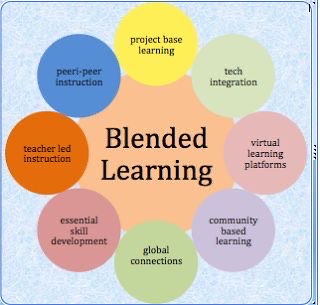
The format of the appendix and the entries of data and information may vary depending on the citation style that the writer, publisher or academic institution is using. Nonetheless, below is an example of a diagram in the appendix and as mentioned in the text . Most appendices follow this convention.

From the body of the text:
3.1 Models of Blended Learning
There are many models of Blended Learning. Practitioners of this learning approach have experimented on varied technology and face to face interaction using different teaching techniques and strategies over the years. The full diagram on the models of Blended Learning is in Appendix C. This chapter will focus on three models of Blended Learning namely, Project Base, Virtual Learning Platforms and Peer to Peer Instruction.

From the Appendix:
Appendix C: Models of Blended Learning


When to include an appendix in your book or research paper?

  • When the information identified inspire exploration and further reading; 
  • When the information backs up the claim or thesis statement;
  • When the information supplements the reader’s understanding of concepts and topics;
  • When the information’s bibliographic data does not fit the format of a footnote.


Recommended sources for citing, making and writing an Appendix

Prepared by:

Zarah Gagatiga,
Teacher Librarian 

The Beacon Academy

Related Posts Plugin for WordPress, Blogger...