Thursday, February 20, 2020

MIL for Grade 10: The Appendix as Referencing System

The Personal Project Coordinator and I sat down this week to discuss and plan a session on creating the appendix. This is for our grade 10s who are in the process of accomplishing their written report on their Personal Project. For this task, the 10s are expected to provide evidences of their process, data and information gathered from their research, and the insights and knowledge they have taken from the entire PP experience. Since the written report is only 1,500 words long, an appendix is needed  for big information and lengthy notes on the sources' bibliographic data that support and supplement it.

For this session, I am approaching the teaching of the appendix as a part of a book. This part-whole approach drives the concept that information and knowledge are created and communicated in a responsible and honest manner. The different parts of a book are evidences of this communication process and responsible creation of information. Specifically, the appendix is a part of a book that communicates created information and knowledge, sources used for its creation and the process the writer went through to produce them.

Below is my library  lesson plan for this session.

PP Session for Grade 10
The Appendix as Referencing System

Goal: Students understand that the book has different parts and these are not isolated entities;
Objectives: 
- Understand the appendix's form and function;
- Create an appendix for the written report of the PP;
- Gain confidence in making a referencing system such as the appendix.

Learning Experience

OBSERVE: Write the bibliographic data of the book. Use MLA or APA format.

 ANALYZE: Answer the following questions

a.       What is the overall theme or subject of the book?
b.      What topics and information are discussed in the book?
c.       Who would benefit from the topics and information of the book?
d.      Describe the book’s Appendix
e.       Explain the purpose and the relevance of the book’s Appendix to the reader

           WONDER: How did the writer create or make the Appendix?

Show samples of Appendixes: Tales from the 7,000 Isles (De Las Casas and Gagatiga, 2011) and PP Coordinator's Thesis
Assignment: Review and reflect on the draft of the written report.
PP Session 2: Creating the Appendix

Related links on the blog about PARTS OF A BOOK

Poem: Parts of a Book
MIL Lesson for Grade 2: Parts of a Book
Parts of a Book: the Appendix

Thursday, February 13, 2020

MIL Lesson: OPVL (1 of 2)

OPVL is a techniques used for the evaluation of sources in the humanities. It is an acronym that stands for Origin, Purpose, Value and Limitations. The IB has published guides on its use and many teachers and librarians have created handouts and worksheets.

Last year, our Personal Project Coordinator requested for a session on the use of resources and its evaluation. Since our grade 10s already know the use of OPVL, I thought of using Visible Thinking to assist them in reflecting through their selected sources. Below is the presentation slides I used in my session with them.

Wednesday, February 12, 2020

Parts of A Book: the Appendix

What is an Appendix?

The appendix is a part of the book that provides the reader additional and supplementary information about topics discussed in its contents. Most often, it is the non-fiction books that have an appendix.Graphs, tables, charts, maps, survey questions, diagrams and photos are information found in the appendix.This information helps the reader make connections and develop a deeper understanding of the topics in the book.

In a research paper or academic report, the appendix also functions as a referencing system. The reader of the paper can turn to the appendix to validate claims and discussions presented by the writer. Data and information found in the appendix reflects the careful research and investigation that the writer went through. It is evidence of the writer’s commitment, courtesy and integrity towards scholarly writing.

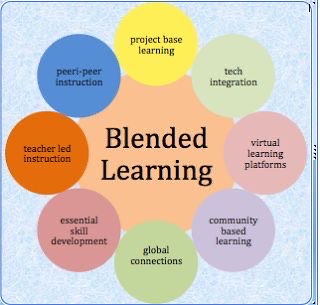
The format of the appendix and the entries of data and information may vary depending on the citation style that the writer, publisher or academic institution is using. Nonetheless, below is an example of a diagram in the appendix and as mentioned in the text . Most appendices follow this convention.

From the body of the text:
3.1 Models of Blended Learning
There are many models of Blended Learning. Practitioners of this learning approach have experimented on varied technology and face to face interaction using different teaching techniques and strategies over the years. The full diagram on the models of Blended Learning is in Appendix C. This chapter will focus on three models of Blended Learning namely, Project Base, Virtual Learning Platforms and Peer to Peer Instruction.

From the Appendix:
Appendix C: Models of Blended Learning


When to include an appendix in your book or research paper?

  • When the information identified inspire exploration and further reading; 
  • When the information backs up the claim or thesis statement;
  • When the information supplements the reader’s understanding of concepts and topics;
  • When the information’s bibliographic data does not fit the format of a footnote.


Recommended sources for citing, making and writing an Appendix

Prepared by:

Zarah Gagatiga,
Teacher Librarian 

The Beacon Academy

Tuesday, February 11, 2020

Bibliotherapy Guide and Module: Storytelling for Growth and Healing - Sampler: Beybi Bibe


Bibliotherapy Guide and Module: Storytelling for Growth and Healing - Bibliotherapy Session Assessment, Evaluation and Debriefing


Assessment and evaluation of a bibliotherapy session can be done by qualitative measurements. A survey of reader satisfaction can be done after every session and at the end of a bibliotherapy program. Interviews with children can be a good measure of success or otherwise. Parents, caregivers and teachers who were present during the sessions can be interviewed as well. The art, writing and recorded music and play activities of kids, as well as the anecdotes recorded by the scribe are materials for assessment and evaluation also. Unless the bibliotherapy session is a research or a study, psychological measurements may be used.

Remember to always ask permission from parents and guardians. They need to be informed at the beginning of the session that record keeping and documentation will be conducted. Be aware of the Data Privacy Act. Agreement forms and consent may be drawn before a team engages in a bibliotherapy session with children. This would include photos to be taken and exposure to social media of the materials their children produced or created.

Debriefing of Bibliotherapy Team

The conduct and facilitation of a bibliotherapy session can be tiring. A lot of effort is already exerted in the planning and preparation phase imagine the energy that is involved in the actual implementation of the session. It is essential that the team go through a debriefing process.

1.      Let the dust settle. Debrief when all operational matters have been concluded.
2.      Debrief in a place away from where the action is. Determine the time and manner of your team’s debriefing session.
3.      Guide questions may be prepared ahead of time and team members can write and answer these questions. During discussion, everyone is ready to talk and communicate
4.      Document the debriefing session. It is advisable to have a minutes of the meeting. This is information for the team to improve the activities, sessions and programs.
5.      Celebrate a bibliotherapy session that you and your team finished conducting!

Monday, February 10, 2020

Bibliotherapy Guide and Module: Storytelling for Growth and Healing - Framework for a Bibliotherapy Session


A.      Pre-reading / During Reading / Post Reading

Pre-reading
-          Establish rapport
-          Set reading and listening reminders
-          Introduce the book or the story
-          Opening activity (one that is related to the story): song, word games, play

Bibliotherapy Process

-          Gain the trust and confidence of the young reader / listener.
During Reading
-          Plenary storytelling / viewing of short movie (for big group)
-          Read aloud (small group)
-          Ask questions that prompts identification, prediction, inferencing and imagination or wonder (focus on characters and how they respond to plot and other charcacters)

 Bibliotherapy Process

-          Identification
-          Catharsis
-          Insight
Post Reading
-          Art activity that show insight of young reader / listener
-          Writing or art activity that will lead to taking action or follow through activity
-          Song, music and movement as taking action

Bibliotherapy Process

-          Identification
-          Catharsis
-          Insight
-          Taking Action
-          Follow Through


B.      3-2-1 Framework by Sanacore, 2012

·         Choice
·         Time 
·         Reading Responses
·         Making Connections
1.       Identify THREE important details and summarize them.
2.       Record TWO things that are of interest to the reader.
3.       Write ONE question about the text/story

Sanacore’s Framework is ideal for a one-on-one session or a small group session of three to five students. Nevertheless, a partner of the bibliotehrapist/storyteller is needed to anecdote the responses of the young readers and listeners.


Bibliotherapy Guide and Module: Storytelling for Growth and Healing - Bibliotherapy Sampler and Tool Kit


Before presenting samplers, activities and the approach into a bibliotherapy session, there are three basic points to remember when one is preparing for a bibliotherapy session. Teacher, writer and guidance counselor Theres Pelias, in her research on bibliotherapy in 2005, provides these reminders:

     Read. Nothing beats a personal knowledge of the story.
     Identify significant parts of the story that echoes your own feelings and thoughts.
     Be keen with connections you know the student/reader can make with the selection on hand.

                For school librarians, Keri McCaffrey (2016) has this to say:

     Develop a comprehensive bibliotherapy list – inclusive of all literary types, genre and media format.
     Accompany the book list or directory with displays of books.
     Create information on mental health and wellness books.
     Create programming with children and teens that address difficult issues and foster learning in a safe environment.

                Resources for bibliotherapy are very important. This is why, in cooperation with librarian friends in the Southern Tagalog Region, we have started collecting and curating titles of books recommended by teachers, parents, writers and concerned professionals. The link to the online form can be accessed here:  https://forms.gle/EGX8mheEc2cKvZvz8

                The librarians involved in this project will be in-charge of the development of a Philippine Bibliotherapy Resource Center (PBRC). This establishment of the PBRC is an online directory and database. Inspired by the many initiatives of librarians, artists, cultural workers and storytellers working and helping evacuation center personnel, staff and volunteers in Batangas, the PBRC includes art, play, music and movement resources.  It has three guidelines for recommending books, activities and resources.

1. Our readers and learners are children in the K-3 grade levels. Consider their development stages in reading and information processing.

2. Our target readers and learners are children from Batangas who are affected by the eruption of Taal volcano. Context matters!

3. Universal themes such as hope, perseverance, kindness and the like are just as important as the readers’ context and developmental stages. Your recommended books and resources can go beyond topics and concepts on natural disasters, displacement, loss, and evacuation.

Here are seven easy to do starter tips for planning and preparing for a bibliotherapy session:

·         * Focus on your purpose: a bibliotherapist is a companion, a listener and a guide.
·         * Select a story that is appropriate for the occasion and purpose of the bibliotherapy session.
·         * Determine objectives and anticipate responses of young readers/listeners of your session.
·        * Follow the 3 steps plus 2 when planning: identification, catharsis, insight + taking action and follow through
·         * Assess and evaluate the bibliotherapy session by reviewing and reflecting the objectives after its conduct.
·         * Anecdote and document as you go. This can also be done by a partner. Needless to say, your preparation and planning can be approached through group or team effort. Composition of team: Storyteller; Scribe; Facilitator/s; Logistics and Operations


Sunday, February 9, 2020

BIbliotherapy Guide and Module: Storytelling for Growth and Healing - Reading Guidance, Reading Advisory and School Library Services


In school library services and programming, the conduct of reading guidance and reading advisory is part and parcel of the expected job output.  

Readers’ Advisory is a fundamental library service where librarians and libraries recommend and suggest books and other reading materials that meet the interests of readers. It is also conducted by bookstores and reading clubs. Information Communications Technology (ICT) tools can greatly support the dissemination of Readers’ Advisory lists, directories and titles curated from the collection. 

Not to be confused with guided reading, a teaching strategy applied by teachers, Reading Guidance is a library service of recommending books and reading materials that is directed to a specific group with an identified need or information problem.  It is at this juncture where bibliotherapy services and programs in school libraries, or even public libraries, find its place.

The American Library Association (ALA) adopted this definition of Bibliotherapy from Webster’s  Dictionary Third International Edition: “ the use of selected reading materials as therapeutic adjuncts in medicine and psychiatry; also, guidance in the solution of personal problems through directed reading.”

Definitions of bibliotherapy as contextualized in the school setting are as follows:

                Bibliotherapy is the provision of health  information and support through books (Brewster, 2008).

                Bibliotherapy is the method for helping human beings in emotional distress. Books are the specific modality, but may also cover films, picture books and oral storytelling (Cargo, 2005).

                Bibliotherapy is a strategy that helps students overcome or deal with current problem(s) or issue(s) in their lives (Stamps, 2003).

                Bibliotherapy is a method of using literature to help students understand themselves and cope with problems relevant to their personal situations and developmental needs (Herbert and Kent, 2000).

Notable findings of research on Bibliotherapy are identified below:

Bibliotherapy has a significant effect in the self-esteem of abandoned children in Children of Joy         Foundation,             Calamba Laguna. Children experienced identification, catharsis and taking        insight in the     bibliotherapy process. (J. Macheca, et. al. 2014.)

 Bibliotherapy is a valuable technique for preventing problems during childhood. (Pardeck, 1990)

 Bibliotherapy...helps promote attitudes of respect and acceptance in inclusive environments. (Kramer, 1999)

 Effective for boys since they have challenges verbalizing their feelings and may be better at solving problems through a third person approach. Characters in books serve as role models for them and help bright boys reflect topics that require analysis of a problem in a safe environment.
( T. Herbert, 1991)

Bibliotherapy with aggressive children in the school setting is effective. It can be applied by
by teachers and counselors in the reduction of aggression and power, and in the enhancement of empathy and self-control. (Shechtman, 2016)

Children’s books affect a child’s theory of mind – an understanding of the mental state of others… discussion of books read aloud to a child positively impacts a child’s
ability to empathize. (Solow and Owens, 2018)


Friday, February 7, 2020

Bibliotherapy Guide and Module: Storytelling for Growth and Healing - Bibliotherapy Through the Years


The use of books and stories for therapy go a long way back to ancient times when a library in Thebes held the sign saying that it is a place for one to restore one’s soul. Thinkers of long ago have recognized the value of books and literature for one’s well-being. The idea that books, literature and places where it can be accessed, such as the library, contribute to a person’s growth, mindset and emotional health is as old as humanity itself. Dr. Benjamin Rush, the Father of American Psychiatry (1811) recommended the use of books and reading materials as additional treatment for patients and clients in his clinic. In 1916, Samuel Crothers, a minister who was concerned with the response and the reaction of readers to a piece of literature defined bibliotherapy as a technique of bringing troubled persons and books together (Wooton, 2017). 

After World War I and II, mental health clinics and hospital facilities with psychiatric services in the US and in Europe opened medical libraries for the research and conduct of bibliotherapy.  Medical librarians would prescribe books and reading materials as companion therapy for patients who survived war and conflict. The Menninger Clinic, particularly, ventured into the research, study and practice of Clinical Bibliotherapy.

Further research in the history of bibliotherapy shows a nun, Sister Mary Agnes, used literature as a way to reach into children and their developmental issues. Books and stories were used to assist young readers in the understanding of their own problems and not as tools to teach morals and values. Dr. Caroline Shrodes, a psychiatrist, was the one responsible for laying down the process of bibliotherapy as akin to psychonanalysis. She identified three steps in the process namely, identification, catharsis and insight. By 1970, practitioners in the field of psychology, child development and education developed a growing interest in bibliotherapy. Rhea Joyce Rubins published a book, Using Bibliotherapy: A Guide to Theory and Practice where three different kinds of bibliotherapy were identified. These are Institutional Bibliotherapy, Clinical Bibliotherapy and Developmental Bibliotherapy.

It is the later kind, which is Developmental Bibliotherapy, that school librarians can be involved in various ways.

Thursday, February 6, 2020

The Lighthouse Diary #19: Volcano, Viruses and Vigilance

It is nearly a month since Taal volcano erupted.

Classes in our campus in Binan resumed last Tuesday, February 4 2020. I missed the campus dearly, the chatter and verve of our students, morning coffee with friends, consultations with colleagues and the predictable ebb and flow of work routines. I didn't realize how precious these things are to me until the three-week disruption of classes.

We are living in uncertain and dangerous times. Taal volcano can erupt, again, anytime. The recent outbreak of the 2019 n-CoV gives us reason to feel anxious and alert. We can only set up emergency measures and distribute information as well as advisory on the virus and the volcanic activities of Taal. Our school leadership and administration are doing their best to follow government sanctioned guidelines assuring everyone their safety and well-being. I, personally, cannot help but do my bit in collating resources and curating content, information and sources on viruses, volcanoes and constant acts of vigilance ( channel your inner Alastor Moody!).

In the midst of the uncertainty, I ask myself, what teaching methods can be designed and applied so that students are not only engaged but are aware of  the changing times? How will changes in the mode of instruction affect the delivery of library services and programs? The challenge to keep abreast with advancements in technology is already a tall order for many. Include volcanic eruption and viral outbreak in the mix and what do we have?

As I read and conduct my research on Blended Learning, I dig up two notable projects I had in my past life as librarian in Xavier School and in recent years as Teacher Librarian in the Beacon Academy.

During my Luceat Lux years, I teamed up with a Reading/Lang Arts teacher for the The Storylady Project:Telecollaboration. That was 2002. The summer before the academic year began, I attended a short course on Technology Integration at ADMU. Didith Tan Rodrigo was the teacher. Mobile learning and robotics were new ideas back then. A story conjured by futurists. I feel so ancient thinking about it now.

The project was pretty simple. It was similar to having pen pals in an online environment. Our grade seven students exchanged emails with students of the Edith Stein School in Durmstadt, Germany. 

The entire batch read The Diary of Anne Frank and the Reading teacher asked me about extension activities to broaden the boys' appreciation of the literature. He did not want another book report or field trip. So I recommended the email exchange project. At the time, many school libraries based off shore were experimenting on email technology as a way to learn language skills, strengthen citizenship in online environments and use information and communications technology wisely.

The Reading teacher thought it was a novel idea, so, we did it. It was in the academic year 2002-2003 when we took this risk. It became our breakthrough year.

Back in Beacon Academy.

It was 2012. I was on my second year and the BA Library was very young. Laying down the structure for a platform of online learning, I put together a Webquest and Pathfinder: A Teenager's Guide to A Meaningful Research. It sailed for one academic year but the ship did not return to its port of origin.

There are many reasons why it was so. For one, everybody was new and we were all learning Managebac so Wikispace.org was another technology to understand. A few years back, Wikispaces.org closed down and the entire content and online learning activities I put together went down with it. So now, I begin anew.

Technology taught me tenacity.

Wednesday, February 5, 2020

Bibliotherapy Guide and Module: Storytelling for Growth and Healing - Introduction


When typhoon Ondoy hit and swept Metro Manila in 2009, my family and I found ourselves relocated in the home of my in-laws in San Pedro, Laguna. It took us a month to get back to our house in Pasig and two more months to fully clean up and rebuild whatever was left from the devastation and the loss. Those three months were trying times, indeed. I look back at how we have survived and risen from the natural disaster. Needless to say, there was an overflowing aide, help and support from family and friends. The typhoon took away many of our material possessions but hope was restored with the generosity and kindness shown by relatives and members of our communities.

It was during that year when I further developed the workshop module on Storytelling for Growth and Healing. I have always believed in the power of stories and storytelling as educative and restorative tools. In stories, we find ourselves. When we encounter a story, especially if it is a good one, we discover our deepest longings. It illuminates our dreams. When stories are told to us by people we know, especially those who belong in our community, they amplify the significance of our human experiences.

The nervous excitement of the first day of school. A visit to the dentist. Getting sick with chicken pox. Being picked last in a football team. Winning in a dance or singing competition. First crush. Watching a concert without a chaperone. Getting in to college. Falling in love. Suffering a broken heart. Learning to trust again.

Stories and storytelling allow us that space to identify and reflect on our feelings against the backdrop of a world and process them into concrete actions. Or at times, leave them as they are and allow the chips to fall where they may.  It is not impossible that in a time of displacement and chaos, such as the recent eruption of Taal volcano, we turn to stories to fill the gaps in our fractured lives. The use of stories and storytelling as designed to alleviate lives affected by conflict and confusion is therapeutic and inspiring.

This guide and module on the use of stories and storytelling is anchored on the beliefs mentioned above. Furthermore, it is designed for parents, teachers, librarians, adults and professionals working with children. This is a product of more than a decade’s work and research on bibliotherapy and a culmination of trainings and workshops on storytelling conducted from 1997 to the present. Bibliotherapy is defined in the guide and a timeline of its development is included for a historical perspective. The bibliotherapy process incorporates art, music and play activities as well as guide questions for young readers and listeners of the selected stories. These are but samplers to the conduct and facilitation of a bibliotherapy session. The “bibliotherapist” is free to make revisions and inclusions in his or her plan. It is advised that a bibliotherapy session be documented as it will merit research in the disciplines of Psychology, Education, Library and Information Science and Social Work.

I intend to distribute this guide and module for free for a period of time. There is no fee in the access of its contents. But, it is under the Creative Commons Attribution-No Derivative Works 3.0 Philippines License.  Please attribute the source and make use of the references mentioned in the guide accordingly.

Related Posts Plugin for WordPress, Blogger...