Here comes a new book about the Philippines! All About the Philippines: Stories, Songs, Crafts and Games for Kids is written by Gidget Roceles Jimenez and illustrated by Corazon Dandan Albano. It is part of Tuttle Publishing's All About Series where countries like Korea, Japan, Indonesia and China are included too.
The book is visually appealing. Ms. Albano's illustrations, done in watercolor, is clean and cool to the eyes. It is sturdy and smelled like gum and vanilla. The layout of every spread is uncluttered. There is balance in the use of space for the text and the illustrations to complement each other. The book's size is ideal for little hands to hold, to cradle and to lay down on one's lap. What truly amazed me was Ms. Albano's renditions of the Pinoy tourists in Banawe and the Pahiyas Festival on the flaps of the book. There is so much color and events going on in one spread denoting festivity and community. It is a book that I immediately warmed up to.
Ms. Jimenez is crafty in using the stories and experiences of Mary, Jaime and Ari, to represent the three biggest island groups in the Philippines and beading together the diverse qualities and characteristics of our archipelago. There is history, geography, language, songs, art and cultural norms and traditions that bespeak of the varied ways in which Filipinos live and love.
I am proud to recommend this book to every school library, local and off shore, to keep in their collection as valuable reference and source book for Filipino children and young people of the world who wish to know the Philippines. There is Google to turn to, but with a well produced book such as this, the internet can wait. Congratulations to Ms. Jimenez and Ms. Albano on this wonderful collaboration! And to Tuttle Publishing for staying true to its mission of bringing the East and West closer to each other.
Showing posts with label the Philippines. Show all posts
Monday, August 17, 2015
Sunday, February 13, 2011
Memories of People Power I
I was only twelve when People Power I broke out. I prayed it would soon be over so I could finish sixth grade and move on to high school. Two decades after, I keep the memory of People Power alive to see patterns of repetitive mistakes, failures and sins committed in the hope that I can, in my own little way, change for the better.
The PCIJ provides a historical glimpse of those three monumental days in February of 1986 and what has happened to twenty key people of that peaceful revolution. Where were you those three days and where are you know two decades after?
Labels:
EDSA Revolution 1986,
PCIJ,
People Power I,
the Philippines
Thursday, July 1, 2010
Sunday, June 27, 2010
Dear Librarian: SLIA's REPLY for Baking at the National Library
Here is my reply for Barefoot Baklesa's lament on the state of the country's biblioteque. I will make this short and sweet.
One can't change a system that has been damaged and neglected over the decades. The state of art and culture, and yes, education and library system included, in this country is in a dismal condition. We can cry and bewail to the heavens; gnash our teeth and pull our hair. At the end of the day, it remains as is.
What one can do, despite this, is to continue working on ways to uplift the dismal status of arts, culture, education and library system in the country.
The duly elected President of the Philippines will be inaugurated on Wednesday, 30 June 2011. I like to believe that he won by a stroke of great hope set upon him by many of us. His ascension to the presidency is influenced by a choice of character over competence. We all need to dig deep into our own character and find strength there in order to continue pushing for the advocacy we support in -- arts, culture, education, socio-civic development, library system in the country, etc.
One can't change a system that has been damaged and neglected over the decades. The state of art and culture, and yes, education and library system included, in this country is in a dismal condition. We can cry and bewail to the heavens; gnash our teeth and pull our hair. At the end of the day, it remains as is.
What one can do, despite this, is to continue working on ways to uplift the dismal status of arts, culture, education and library system in the country.
The duly elected President of the Philippines will be inaugurated on Wednesday, 30 June 2011. I like to believe that he won by a stroke of great hope set upon him by many of us. His ascension to the presidency is influenced by a choice of character over competence. We all need to dig deep into our own character and find strength there in order to continue pushing for the advocacy we support in -- arts, culture, education, socio-civic development, library system in the country, etc.
Tuesday, June 15, 2010
Wednesday, May 19, 2010
Bohol Island Day 1-3 (May 15-17, 2010) Part 2
From island hopping, we went inland to discover more of Bohol's splendor. The day's itinerary were as follows: Tarsier, Chocolate Hills, Man-Made Forest between Bilar and Loboc, Floating Restaurant on the Loboc River, Baclayon Church and the shrine of Pacto de Sangre.
It was a long drive inland but leisurely and relaxing. Our first stop was the Tarsier zoo. Finally I saw them, live! They were so small indeed. They clung to the branches in huddled repose, eyes wide and bulging, fingers wrapped securely on a tree branch.

Dianne and I said our goodbyes to the tarsiers. Mang Jerry our driver and tour guide of the day, brought us to Chocolate Hills. The road was paved but windy. It sort of reminded me of Baguio because there were big boulders that flank the road left and right. According to Mang Jerry, Bohol rose up from the bottom of the sea. That's not impossible as all islands are volcanic and most are formed under the sea where forces of water, air, fire and earth combine. See how magnificent this universe is!

It's no wonder that the Chocolate Hills were formed. It's nature's way of having fun, really. Just imagine if these hills developed into mountains, then, there would have been a mountain range in the Visayas. But no. The universe did not allow it. So now we had a wonder of the world to behold. The hills do look like chocolates as the foliage turns brown in the sun. Dianne was thinking, how come there were no chocolates for sale around? Peanut kisses were a plenty. Perhaps it's time to make a choco-peanut variant as homage to the Chocolate Hills.

Next stop was the Butterfly Sanctuary at Bilar. We were entertained by Jobert, the guide there who gave us an amusing tour of the place. The butterflies were beautiful. All butterflies in the garden are endemic to Bohol.
On our way down to Loboc, we passed by the Man Made Forest which is five hectares wide. Mahogany trees were planted by students of the Holy Name School of Bohol. They've been doing this for forty years! Dianne was reminded of the US when we stopped for a short while to take pictures. It was a cool spot.

We drove further down to Loboc River to have lunch at the Floating Resto. It comes with a singer cum guitarist. There was a part where the raft paused so that guests and tourist would be entertained by local community for some singing, dancing and banduria serenade. The whole community of Brgy. Gotozon did a fantastic job at performing traditional dances. I have not seen folk dancers do the tinikling since I was a kid. Bravo!

The final leg of the journey was the Baclayon Church and Museum. It is the second oldest church in the Philippines. The Jesuit fathers built it in 1727 out of wood. In time, the Augustinian Recollects took over and renovated the church in to its current state. It's made of coral stones taken from the sea. The adjoining museum is another interesting site and sight. I could not say they're doing a great job at preservation and conservation efforts though. The church was named a national historic site in 1994. With a flourishing tourism trade, the Baclayon municipal government or the LGU of Bohol could at least find ways to finance its restoration, especially the artifacts that has been corroded by the salty sea air. It doesn't help that Baclayon Church faces the sea.

Speaking of care and respect for historical sites, Filipinos need to be educated on this matter. I am embarrassed at the lack of historical pride and cultural appreciation among my country men. Napoleon Abueva, National Artist, made the sculpture of Pacto de Sangre, the one that stands in front of Baclayon Church. Abueva based his work form another master, Juan Luna, who painted the Pacto de Sangre when he was in sojourn in Europe. Tourists would climb up the sculptures and pose wacky faces between Urdaneta and Legaspi. I did not see any foreigner doing so, just Pinoys.

Despite this, the tours and sight seeing in Loboc, Baclayon, Bilar and Carmen were highly educational and leisurely. Now I've so much to share to my own children, the kids I teach and the colleagues I interact with. From mountain to sea, there are so many things that bind these archipelago together - love for family, generosity, simplicity...and a need to know more deeply beauty of these islands.
It was a long drive inland but leisurely and relaxing. Our first stop was the Tarsier zoo. Finally I saw them, live! They were so small indeed. They clung to the branches in huddled repose, eyes wide and bulging, fingers wrapped securely on a tree branch.
Dianne and I said our goodbyes to the tarsiers. Mang Jerry our driver and tour guide of the day, brought us to Chocolate Hills. The road was paved but windy. It sort of reminded me of Baguio because there were big boulders that flank the road left and right. According to Mang Jerry, Bohol rose up from the bottom of the sea. That's not impossible as all islands are volcanic and most are formed under the sea where forces of water, air, fire and earth combine. See how magnificent this universe is!
It's no wonder that the Chocolate Hills were formed. It's nature's way of having fun, really. Just imagine if these hills developed into mountains, then, there would have been a mountain range in the Visayas. But no. The universe did not allow it. So now we had a wonder of the world to behold. The hills do look like chocolates as the foliage turns brown in the sun. Dianne was thinking, how come there were no chocolates for sale around? Peanut kisses were a plenty. Perhaps it's time to make a choco-peanut variant as homage to the Chocolate Hills.
Next stop was the Butterfly Sanctuary at Bilar. We were entertained by Jobert, the guide there who gave us an amusing tour of the place. The butterflies were beautiful. All butterflies in the garden are endemic to Bohol.
On our way down to Loboc, we passed by the Man Made Forest which is five hectares wide. Mahogany trees were planted by students of the Holy Name School of Bohol. They've been doing this for forty years! Dianne was reminded of the US when we stopped for a short while to take pictures. It was a cool spot.
We drove further down to Loboc River to have lunch at the Floating Resto. It comes with a singer cum guitarist. There was a part where the raft paused so that guests and tourist would be entertained by local community for some singing, dancing and banduria serenade. The whole community of Brgy. Gotozon did a fantastic job at performing traditional dances. I have not seen folk dancers do the tinikling since I was a kid. Bravo!
The final leg of the journey was the Baclayon Church and Museum. It is the second oldest church in the Philippines. The Jesuit fathers built it in 1727 out of wood. In time, the Augustinian Recollects took over and renovated the church in to its current state. It's made of coral stones taken from the sea. The adjoining museum is another interesting site and sight. I could not say they're doing a great job at preservation and conservation efforts though. The church was named a national historic site in 1994. With a flourishing tourism trade, the Baclayon municipal government or the LGU of Bohol could at least find ways to finance its restoration, especially the artifacts that has been corroded by the salty sea air. It doesn't help that Baclayon Church faces the sea.
Speaking of care and respect for historical sites, Filipinos need to be educated on this matter. I am embarrassed at the lack of historical pride and cultural appreciation among my country men. Napoleon Abueva, National Artist, made the sculpture of Pacto de Sangre, the one that stands in front of Baclayon Church. Abueva based his work form another master, Juan Luna, who painted the Pacto de Sangre when he was in sojourn in Europe. Tourists would climb up the sculptures and pose wacky faces between Urdaneta and Legaspi. I did not see any foreigner doing so, just Pinoys.
Despite this, the tours and sight seeing in Loboc, Baclayon, Bilar and Carmen were highly educational and leisurely. Now I've so much to share to my own children, the kids I teach and the colleagues I interact with. From mountain to sea, there are so many things that bind these archipelago together - love for family, generosity, simplicity...and a need to know more deeply beauty of these islands.
Saturday, May 15, 2010
Sagada (Day 1)
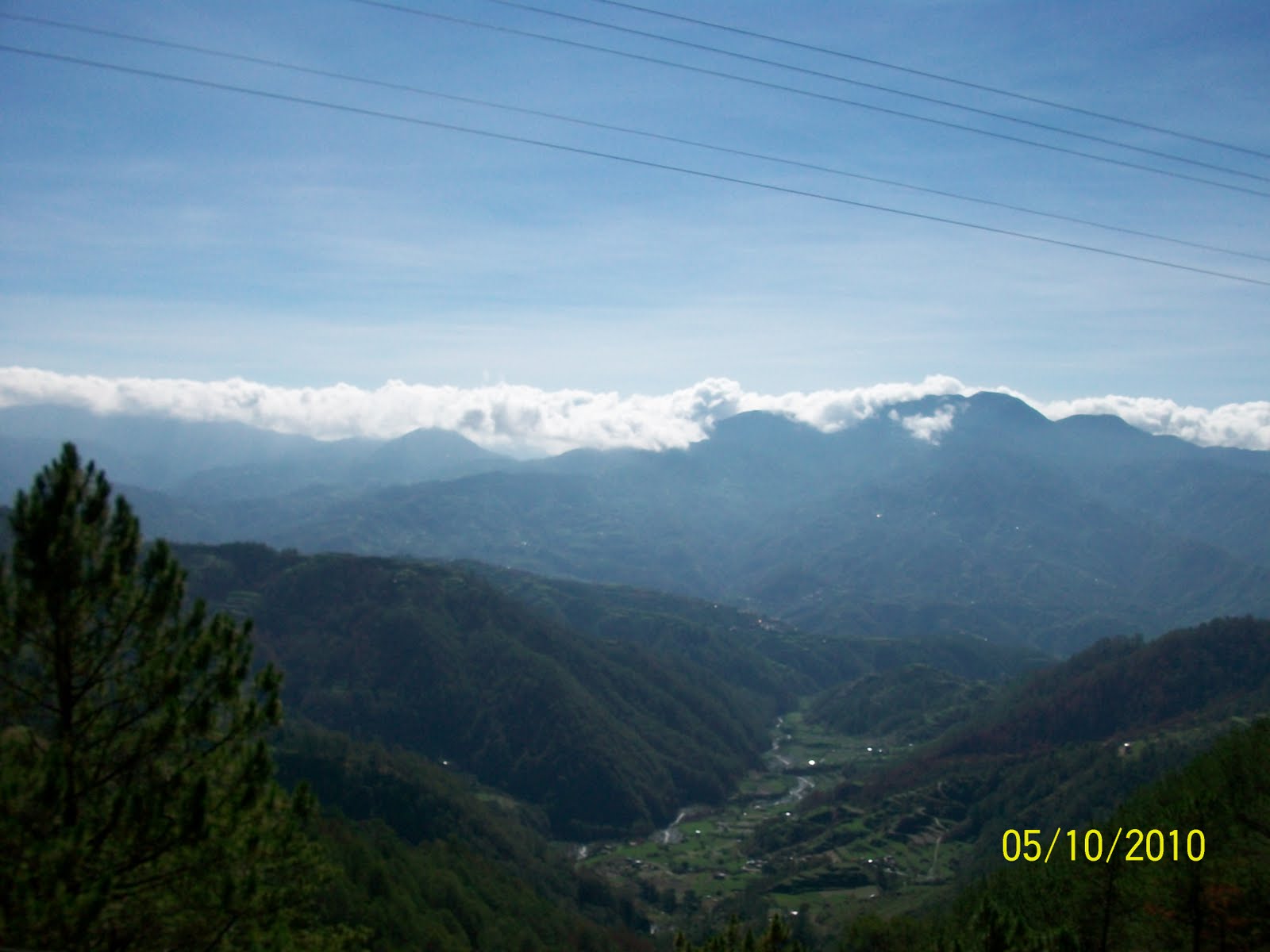
Upon arrival at the poblacion, we immediately met Manang Julia, the landlady at St. Joseph’s Resthouse. She’s such an easy person to talk to. She gave us great discount to our lodgings as well. Thanks to Roderick Ramos, my friend and colleague, who inspired me to go to Sagada with Dianne in the first place.
There were seven of us city slickers, six from Manila and one from New Orleans. We were tourists in a place where time moved in slow motion. No rush. No hurry. It was so easy to tell us apart, what with Dianne and her strong American features standing out the locals looked and wondered. Then, with a knowing smile, we were labeled in their eyes – lowlanders. Yes, the Sagadians were a friendly lot but they keep a certain distance from new comers. We were welcomed and were treated rightfully though. Then again, I could not help but feel like a stranger in my own country.
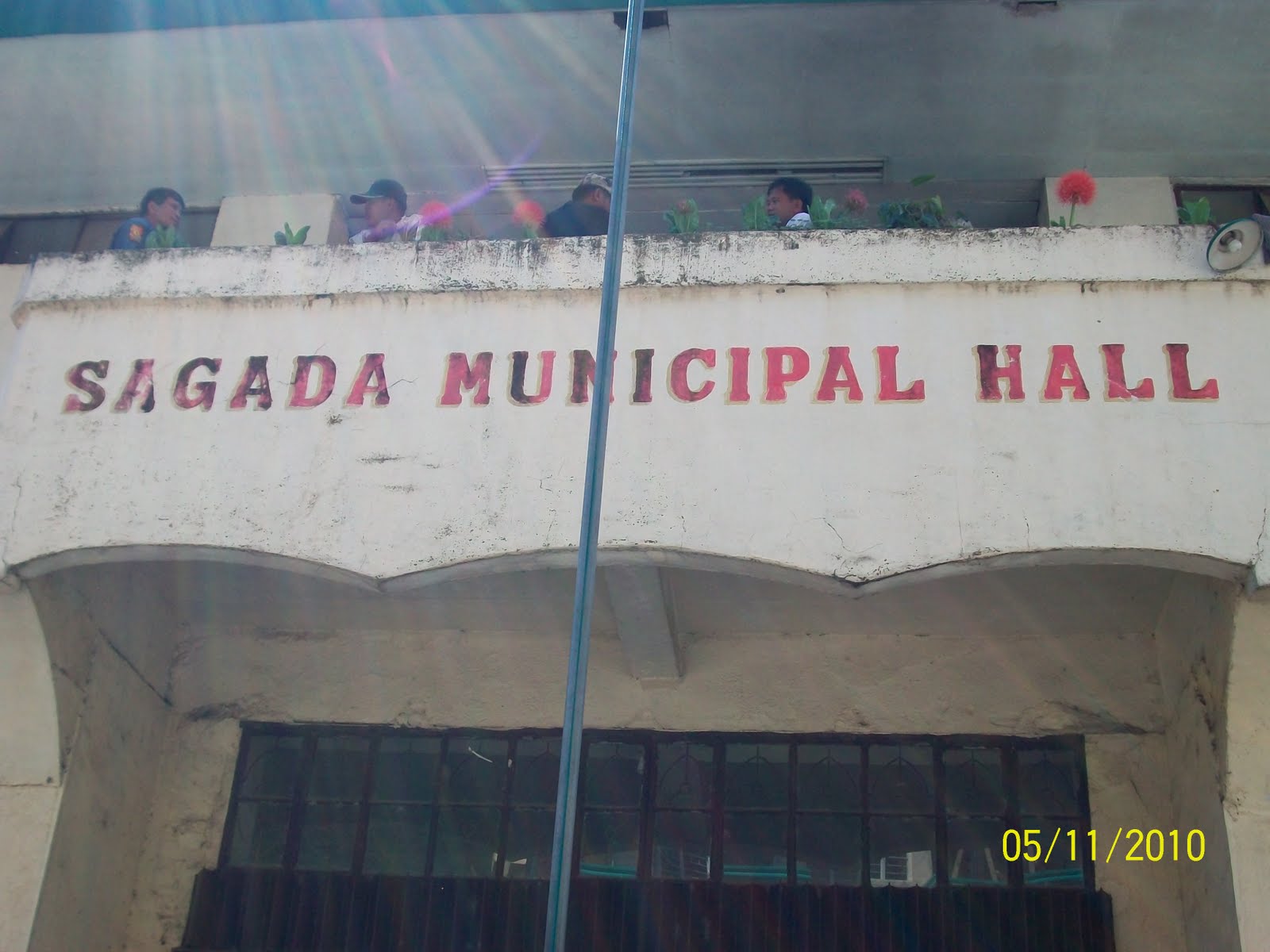
At the municipal hall, we talked to the assigned personnel at the information center for tours and registration duties. A minimal fee is needed to do this – only 20 pesos and you could pick your choice of Sagada adventure. While the idea of trekking, caving and seeing the sights fermented in our minds, our stomachs got the better of us. So, we headed to the nearby Masferre Café for a late lunch. The restaurant is family owned. Eduardo Masferre is a Spanish Mestizo known for his photographic art of the Cordillera people. His photos chronicled and depicted the Cordillera way of life and culture. What could not be described in words, Masferre captured in photos. Some of his photos were exhibited on one wall for costumers to look and see while waiting to be served. His son, the youngest (I think) manages the restaurant. Patricia Masferre, granddaughter of the master, waited and served us lunch.
Sunday, May 2, 2010
Puerto Princesa City Tour
In the afternoon of April 29, 2010 Dir. Lou David and I went on a city tour of Puerto Princesa. We visited The Crocodile Farm, the Butterfly Garden, Baker's Hill, the Mitra Ranch and yes, the city's market. We rented a transportation to bring us to these places. The drive was slow but sure. There is a speed limit for all means of transportation in all of Palawan, so our guide told us. Signs on speed limit litter the road side. Needless to say, we reached every destination safe and sound. The good view of the country side was an added treat. The temperature was searing hot, but with plants and tress in abundance, the warm weather in Puerto Prncesa was not as offensive compared to Manila. Our guide told us that Palawan is far from any fault line. Typhoons rarely visit or pass the islands.
The places we went to were the usual tourists fare. The skeleton of the giant crocodile displayed at the lobby of the Crocodile Farm museum was amusing. The fearsome reptile was caught with half a fisherman's body in its mouth. Five years later, it died in captivity due to stress. The Butterfly Garden was currently under construction so there was little to see. Mitra's Ranch offered us a breath taking view of Honda Bay. Baker's Hill boasts of the best hopia in town so I bought some for pasalubongs. At the market place, we bought fresh dried fish. Yes, fresh. The catch from the sea is immediately preserved. Cashew nuts are aplenty too. Roxas, the town next to Puerto Princesa is famous for its cashew trees. I got some for the hubby because nuts are his favorite snack. If time would have allowed us to visit the Underground River, we would. But Dir. David and I have full schedules the following day. Now that gave us another reason to go back to Puerto Princesa some time in the near future.
Wednesday, April 7, 2010
Do you blog? iBlog!
It's the 6th iBlog Summit on April 16 and 17, 2010 at Malcolm Theater, UP College of Law, UP Diliman. It will run from 8AM to 5PM.

Memories of my attendance to the 1st and 2nd iBlog Summits come rushing back. Enter sentimental music.
Labels:
bloggers,
blogging,
blograrians,
filipinos,
iBlog,
the Philippines
Wednesday, August 5, 2009
Prayer for Cory*
(Inspired by Ninoy Aquino's poem and Joe Mari Chan's song)
Heavenly Father,
We have fallen in love
with the same woman three times:
We loved her first in 1983,
when she flew back home,
a grieving widow in black.
Her brood under her wings,
she wrapped her grief with faith,
and with all her heart,
she embraced our frightened, fragmented nation.
We fell in love with her a second time,
as she marched the streets,
a reluctant Moses defying our Pharoah
who demanded to “let her people go.”
She called down confetti rain,
and through her infectious courage
we crossed the yellow sea.
Today we find ourselves falling
for the same woman a third time:
Surrendering herself to You,
she gathered her pain and ours—
a wounded, bewildered, downhearted people.
Not once did she give up on us.
And in her death, suddenly,
we regain hope in ourselves.
Lord, we thank You for our love for Cory
for each time we fell in love with Cory,
we fell in love with country,
And we fell in love with You.
AMEN.
*Courtesy of Fr. Johnny Go SJ. The same prayer was used as invocation during the necrological services last night at the Manila Cathedral.
Heavenly Father,
We have fallen in love
with the same woman three times:
We loved her first in 1983,
when she flew back home,
a grieving widow in black.
Her brood under her wings,
she wrapped her grief with faith,
and with all her heart,
she embraced our frightened, fragmented nation.
We fell in love with her a second time,
as she marched the streets,
a reluctant Moses defying our Pharoah
who demanded to “let her people go.”
She called down confetti rain,
and through her infectious courage
we crossed the yellow sea.
Today we find ourselves falling
for the same woman a third time:
Surrendering herself to You,
she gathered her pain and ours—
a wounded, bewildered, downhearted people.
Not once did she give up on us.
And in her death, suddenly,
we regain hope in ourselves.
Lord, we thank You for our love for Cory
for each time we fell in love with Cory,
we fell in love with country,
And we fell in love with You.
AMEN.
*Courtesy of Fr. Johnny Go SJ. The same prayer was used as invocation during the necrological services last night at the Manila Cathedral.
Labels:
Corazon Aquino,
Filipina,
Jesuits,
prayer,
the Philippines
Monday, August 3, 2009
Carlo J. Caparas, National Artist
If you believe otherwise, there is an online petition for Carlo J. Caparas as an unqualified National Artist.
If you are ready to make a stand, go to Petition Online.
I'm signatory no. 628.
If you are ready to make a stand, go to Petition Online.
I'm signatory no. 628.
Saturday, August 1, 2009
Goodbye, Tita Cory
Corazon Aquino, the heart and soul of the original People Power died today at 3AM after more than a year's battle with colon cancer.Tributes are pouring in for Tita Cory. During the months and weeks that she spent at the hospital, local columnist and journalists have written about her. This one by Condrado De Quiros is my favorite.
To the reluctant hero who believed that the Filipino is worth living for, please continue praying for us in heaven!
Monday, July 27, 2009
A Yellow Ribbon for Cory Aquino
I was merely a sixth grader when Cory assumed the presidency in 1986. There are only two things I have memories of her as President of the Philippines -- coup d'etat and Kris Aquino.
Her spiritual adviser is a Jesuit though and it was only in later years when I fully appreciated her spirituality. Here's a yellow ribbon for Tita Cory. I'll say a prayer for her tonight that she, and her family, may be ready to fully surrender her life to God's will.
Labels:
Corazon Aquino,
life,
politiics,
prayer,
the Philippines,
yellow ribbon
Subscribe to:
Posts (Atom)