Sunday, July 8, 2018

A Library School and An Art Building Grow in Quezon City! (1 of 2)

L-R Tessie Moran, librarian of NBS College, Elnora Conti and ZarahG
In a time when the political climate cast shadows of darkness within the country, and seemingly this stretches out beyond our shores, I see hope flicker in corners that need to be brightened even more. These corners are places where dreams are born and they take flight. A library school grows in Quezon City and an art building is in the works in UP Diliman.

Let me share about this new library school first and the second post will be about the new art building of the College of Fine Arts in UPD.

Right after the PBBY board meeting last June 18, I visited the National Bookstore College. There I met Madame Elnora "Ate Nora" Conti, former president of MAHLAP and former member of the PRC Board for Librarians. I call her Ate Nora, since, in PNU culture, we call our older alumni and upperclassmen "ate" and "kuya". Ate Nora and I were part of the group who gave birth to the PNU Library and Information Science Alumni Association. She was its first president and I was the treasurer. Neither of us is active in the association anymore, but it is our bragging right to claim that we set it up for future LIS alumni of PNU to continue its goals and objectives. Observing the activities and events the PNULISAA has organised in years past, they are doing a good job at programming professional development activities for its members. With a bit of inspiration, they can do more.

And so, this was our meeting point. It felt good to reconnect with Ate Nora after all these years. Seeing her up and about after life's challenges made my admiration of her grow even more. In NBS College, she is helping the young learning community grow the Library Information Science curriculum and program. You cannot really stop strong and determined women.

She gave me a tour of the new college which was located in the 4th floor of the National Bookstore building along Quezon Avenue. How it reminds me of Beacon Academy minus the green environment. As a start up, there is the promise of good things to come and dreams to be fulfilled. That makes start ups exciting places to work in. Knowing Ate Nora and our experience in PNULISSA, I understand why she is there at NBS College. I do recognise where the pioneering spirit comes from.

The NBS College exudes a modern and urban atmosphere that young city dwellers looking for a new place to learn and to be will find it there. The design of the rooms and workspaces reflects the city's character, big, bustling and proud. They will open their doors college students this August. Of the six bachelors degree courses they offer, Bachelor of Library Information Science is one. The college offers scholarships and grants for the pioneering batch.

NBS College bears the name of its popular bookstore as built by Socorro "Nanay" Ramos. But, NBS takes on a new meaning: Nurturance; Benevolence; and Service. It does sound like Nanay Ramos' life goals and mission-vision too, right?

For information, call 02-216-5716. Email is info@nbscollege.edu.ph. Visit its website www.nbscollege.edu.ph.

Friday, July 6, 2018

PASLI Meet Up with Dr. Diljit Singh

Last month, I was invited by PASLI President, Cris Laracas to a meet up with Dr. Diljit Singh. Our Malaysian friend was in town for lectures in the University of the Philippines. I said yes to the invitation, of course. I have not seen friends in PASLU in a while and I had the time for some catching up. Besides, I had work to do for NCBD and visiting the Diliman area is an idea I always welcome. Jude Gorospe and Mavic dela Cruz, officers of PASLI, came to the meeting as well. 

L-R Mavic dela Cruz, Cris Laracas, ZarahG, Dr. Diljit Singh and Jude Gorospe
The agenda on the table was the 2019 Regional Conference of School Librarians in Manila. Dr. Singh is creating linkages for South East Asian school librarians, researchers and practitioners to make this a possibility. The conference is a big leap for PASLI to spearhead, but with help from colleagues in the IASL Regional board, I am confident this professional event will push through.

This is a long time coming. I remember back in 2013, when Jude Gorospe and I were in Bali for our attendance to the IASL Conference there, talk of a Regional Conference in Manila floated around. Previous to this, there was the 2012 IASL Regional Conference in Bacolod organised by Hon. Lourdes T. David who was then the director of the Rizal Library. Fast forward to 2014 (or was it 2015?), Dr. Singh and I had dinner with PASLI Officers in Makati to reconnect. PASLI was then being led by Gemma Murillo-Cuna. 

After successful conferences in Bangkok (2015), Indonesia (2016) and Myanmar (2017) by Regional IASL Officers, Dr. Singh has his sights on Manila. With the newly elected IASL representative in Asia, Dr. Shy-mee Tan who I met in Bangkok during the School Librarians Workshop there, a collaborative approach to organising a Regional Conference here is not far fetched. PASLI is taking up the challenge and they are being brave. 

These days, we need to take courage and we need to be kind. What an opportune time to be organising a Regional Conference for school librarians!

Wednesday, July 4, 2018

2018 NCBD: Sa Aklat May Laya!

Here is a video clip of Ms. Pepper Roxas' keynote address during the 2017 National Children's Book Day (NCBD) at the Cultural Center of the Philippines (CCP). In this video, she talks about books, reading and the power of stories.


This year, the Philippine Board on Books for Young People (PBBY) celebrates the 2018 NCBD with ceremonies at the CCP and Salaysayan: A Read Aloud and Storytelling Festival at the Museo Pambata. On July 21, 2018, literacy and art workshops will be held in Iloilo.

Visit the PBBY Facebook Page for details: https://www.facebook.com/ThePhilippineBoardOnBooksForYoungPeople/


Saturday, June 30, 2018

Book Review: A Reaper at the Gates

A Reaper at the Gates (An Ember in the Ashes, #3)A Reaper at the Gates by Sabaa Tahir
My rating: 4 of 5 stars

There are three words to describe this book. Magic. Mayhem. Murder. The same three words I used for books 1 and 2. I am adding a fourth word for this third installment —mothers, which makes reading Reaper all the more difficult for me.

It is an exciting read, for sure, and it had me surprised and disappointed at some points in the novel. But, it is Sabaa Tahir’s explorations and presentations of mothers of all kinds and the many ways women can mother children not their own that moved me to tears. The human heart is only as big as a fist and a mother's can accommodate an entire world. Women are amazing beings and reading this book amplified it more so.

How a novel written for young adult readers can affect me like this is magic indeed. When is the fourth book coming out?


View all my reviews

Friday, June 29, 2018

The Language Experience Approach (LEA) Part 2 of 2


LEA ACTIVITIES

NATURE WALK - Go for a 10-15 mins walk in the garden or outdoors. Observe the surroundings. What do you hear, see, smell and feel? After the walk or stroll, talk about the experience. Write them in sentences, then read it aloud to yourself or to others.

My Favorite Things - Choose pictures of the things you like from old magazines. Cut them out. Paste each picture on a clean sheet of paper. Tell a partner why you like these things. Write it down once you are done sharing with your partner. Put them together to form your book of favorite things.

Wordless Picture Book - Tell the story of a wordless picture book using your own words to a partner. Write a sentence for each page of the book on a separate page.  Have your partner read what you have written down. Talk about the experience of telling and writing the story.

In Your Own Words - What is your morning routine? What activities do you do in a day? Write them down or draw it. Turn to your partner and talk about routines and activities you do. Listen to your partner as he/she talks about her schedule.

Before Going to School - List down the things you do before going to school. Draw the most important to you. Write the reasons why and read it aloud to your partner. Compare your work and discuss.

After LEA Activities

1. Identify relevant words in the written output.

2. Make a list of these words in a WORD WALL. As an extension, make a dictionary form these words.

3. As a reader, identify sentences that struck you from the works of your classmates/co-participants.

4. In a group, discuss reasons why you found the sentences meaningful.

5. As an extension activity, go to the library and look for:

a. Magazines about nature or the environment;
b. A book on scrapbook making;
c. Wordless Picture Books;
d. Posters, brochures or infographics on time management;
e. A book that has a poem or stories about school and friends in school.

Remember these basic principles of LEA as postulated by Roach Van Allen (1964), one of the proponents of LEA.

What I can think about, I can say.
What I can say, I can write.
I can read what I have written.
I can read what others have written for me to read.

Listen. Speak. Read. Write!

Sources:
The Literacy Bug, June 2018 Retrieved

Harker, W. John. The Language Experience Approach. 

The Language Experience Approach (LEA) Part 1 of 2


“...the language experience approach (LEA) is a whole language approach that promotes reading and writing through the use of personal experiences and oral language. It effectively helps develop learners' print awareness, since learners see the direct connection between images and words. It effectively connects known vocabulary and new vocabulary with print words, since the experience and image(s) correlate with words in the written caption(s).” 

The Literacy Bug, June 2018 Retrievedhttps://www.theliteracybug.com/using-the-language-experience-approach/

Using LEA in the classroom for group and one-on-one sessions has many benefits. It allows teacher and students to discuss experiences and to have these written down would automatically familiarize students with the structure of language and the dynamics of using them. From speaking about experiences, listening to responses and writing these down, students learn reading skills along the way. In LEA, students engage in the communication of their experiences, there is a deeper connection to content making learning more meaningful.

The Language Experience Process

Before and During the Experience
1. Establish a common experience.
2. Pay attention to this common experience and how language (vocabulary) is used and documented (organizers, journals, cards, digicams, social media, etc.)
3. Be aware of instructions that take place and how discourse is built from the common experience.

After the Experience
1. Display and show evidences of learned vocabulary, new, old and how it is constructed through graphic organizers (mind maps, flow charts, semantic maps).
2. Review how sentence structures and cycles manifest in students documented writing.
3. Provide feedback on their writing that will help improve and enhance reading and writing skills.
4. Repeat the reading of newly constructed texts and observe how memory further shapes of improves the telling or writing of the experience.
5. Use newly constructed texts and vocabulary for further study.

Extending the Experience
1. Find an opportunity to link new readings to the common experience, for example, poems, magazine articles, social media posts, advertisements and flyers.
2. Provide a connection of these readings to writing activities.
3. Reflect on select areas of the experience and activities with students. 
4. Record these reflections by keeping them in a learning portfolio.


Thursday, June 28, 2018

Salaysayan 2018 Program: A Read Aloud and Storytelling Festival


Salaysayan 2018
A Read Aloud and Storytelling Festival

In celebration of National Children’s Book Day, the PBBY stages the 2nd Storytelling Festival with emphasis on Read Aloud as a strategy to bring to life books and the written word. This year’s Salaysayan is not a contest nor a competition but a celebration of the different and varied ways we can enjoy and learn from narratives and stories. Because PBBY believes in the valuable role of families in nurturing children’s curiosity and  in teaching them literacy skills, a talk for parents is included in the this year’s program. To further guide parents in selecting reading materials for their children, PBBY and Museo Pambata will stage a book display and book selling by publishers of children’s books.

By offering this wholistic and integrated program in this year’s Salaysayan, we are hopeful that we can achieve our goal of developing readers with a genuine love for books and stories. We dream that one day, our young readers become confident creators of their own narratives who are able to define, flavor and shape this nation’s collective narrative.

Date: Tuesday July 17, 2018
Time: 1PM - 4PM
Venue: Museo Pambata
Registration Fee: Php 250.00
Online Registration: June 20, 2018 - July 11, 2018

Book Selling from 10AM - 4PM

Program
1:00 - 2:00 PM - Registration
2:00 - 2:30 PM - Plenary and Orientation at Karapatan Hall by Zarah G
2:30 - 3:30 PM - Parenting Talk: Children Growing Up With Books: A Developmental Perspective 
Resource Person: Teacher Vic Villanueva

SET A
SET B
2:30 - 3:00 - Room 1 Old Manila
Room 4 Bahay na Bato
3:00 - 3:30 - Room 2 I love my Planet Earth
Room 5 Paglaki ko room
3:30 - 4:00 - Room 3 Aklatang Pambata
Room 6 Katawan Ko Area


Saturday, June 23, 2018

Thoughts on Mother Tongue Based - Multilingual Education Training for Teachers and Librarians

It is very timely that I am running a book sale of the Bulilit Books-PROJECT LEARN Series as fundraiser for our eldest’s endeavors in music. I will use these books as one of the three samples for a session on writing and producing materials for a training-workshop on Mother Tongue Based Multilingual Education in Cagayan De Oro next week. Having done preliminary research on MTB-MLE reports and best practices I have information on the relatively small literature of mother tongue based instruction in the country today. I am excited to do this workshop with friends from the National Library of the Philippines, nonetheless. I will be meeting a new community of learners.


Miyawing Kuting, Beybi Bibe, Magbilang Tayo Filipino versions

I recall the teacher training sessions I had in the past six months. One in Albay and one in Oriental Mindoro. The learning and insights I learned in Albay and in Mindoro are factored in this new module I have designed for public school teachers, school librarians and public librarians of Cagayan De Oro. One new thing I have added is a role clarification activity. Do we expect teachers to write stories in the mother tongue? Why not? But to what purpose? Where is pedagogy in the creation of stories? Why is there a learning resource management database and why give the task of managing the database to a licensed librarian? How effective are writing competitions in the growth and development of mother tongue materials? Is there documentation of all our mistakes and success stories? If there is, what does it tell us? If none at all, how do we make one?

The Cebuano versions of the Bulilit Books-PROJECT LEARN Series

I was invited as a writer of children’s books to run the workshop, but I am first of all, a librarian and a teacher who loves storytelling and believes in the power of narratives. I am challenged, yet confident enough to show MTB-MLE from different lenses: as librarian, teacher, storyteller and writer.

It is a journey that excites and  frustrates me interchangeably because writing didn’t come to me in a dream nor was it a gift from the muses. I did not breathe out a full story upon waking up. No. Writing, for me, has always been a struggle. The reasons are many. But I persist. It is a lot of hard work. 


The Hiligaynon versions of the Bulilit Books-PROJECT LEARN Series

 I will tell the story why and how it is so in the session on writing the Bulilit Books-PROJECT LEARN Series.

Darrel Marco, Xi Zuq and Tinsley Garanchon, keeping you all in mind when I run the workshop in CDO next week! 🙏🏾💕

Friday, June 22, 2018

Salaysayan 2018: A Read Aloud and Storytelling Festival

It’s National Children’s Book Day on July 17, 2018! Join us by attending the Salaysayan 2018 at the Museo Pambata, 1-4pm.


Salaysayan 2018

A Read Aloud and Storytelling Festival


Open to kids of all ages and kids at heart! Enjoy and learn different ways in telling stories. Attend a parenting talk on books and children’s reading development by Victor “Teacher Vic” Villanueva.


To pre-register and for information on the registration fee go to this link:


https://goo.gl/forms/3kPoDeApmLWEuMHl2

Saturday, June 16, 2018

Rave Reviews for My Daddy! My One And Only

It is Fathet’s Day tomorrow, June 18, 2018 and My Daddy! My One and Only! (Gagatiga and Tejido, Lampara House 2013) has topped the list of favourite daddy books!

Reviewed and recommended by Alexine Parreno in Smart Parenting, this is what she said of our book.

“The text is simple and illustrations are adorable. This book has so much love to share, making it perfect for reading together as a family,”

Read the full review by following this link:


You will also find out the daddy books that made it to the top 7 list!

Over at Instagram, @pumplepiebooks recommends My Daddy! My One and Only as a good read to celebrate the wonderful ways fathers show their love. Check it out here:


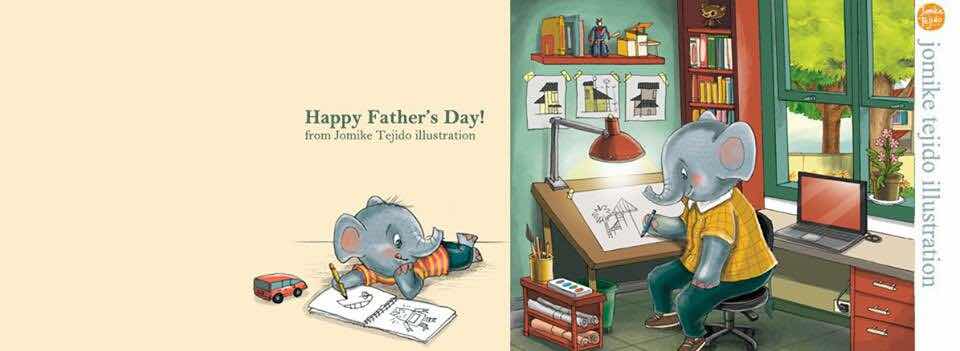
Lastly, enjoy this Father’s Day banner by Jomike Tejido.


Friday, June 15, 2018

Teacher on Center Stage: Teacher Anna Bacudio and the Dagdag Dunong Reading Center (2 of 2)


Teacher Ana Bacudio shares with us the miracles and generosity of strangers she met who helped her feed and teach the children of Dagdag Dunong Reading Center.

Here are the top three amazing stories that I would like to share about Dagdag Dunong Center.

Amazing Story 1 - There was  a time that the Cultural Center of the Philippines invited us to watch the play " Sandosenang Sapatos " by Luis Gatmaitan, where I brought 50 street children. This was part of our educational field trip called "Matuto sa Lakwatsa". One of the children was a polio victim carried by another child on his back because he doesn't have a wheel chair. Another child has Down Syndrome and I asked his mother to accompany him. I asked all of the children and the carers to wear red shirt so that I can easily locate them as CCP is big. 

Some of my children do not wear shoes, most of them wear slippers only. As we are falling in line at the back of the door entrance (paying clients will enter the theatre first, we have complimentary tickets only) a man approached us and asked me if we are an orphanage. I told him that we are from the Dagdag Dunong Reading Center in Singalong and we are invited by CCP to watch the play for free. I even told him that I am shy because some of my children do not wear shoes as they are poor and their parents can't afford to buy new shoes for them. The others who wear shoes have worn out shoes just like the smallest girl in front of the line who kept fixing her shoes because its strap was broken. The man looked at the children intently and suddenly he told me to give him a list of the children with their corresponding shoe sizes and he will buy shoes for all of them. I told my carer- assistants about that and the children were so intelligent that they know exactly their shoe size. Within five minutes, the list was complete and I handed the list to the man together with my address and contact details.

We are still in the line when the man approached me again and asked where are we going after watching the show which will end by 12nn. I told him that we will go home and I will cook rice for them at home as we don't have budget for fast foods.

The man said that he has bought and reserved 60 chicken joy meals at the Jolibee food store just across CCP for all of us. The children were so happy upon learning that and they enjoyed the play as well as the Jolibee meals. We arrived at the reading center at 2 pm and we rested and by 4pm, a child came to me saying that the man has arrived with the 50 pairs of shoes. 

The children were so happy. Indeed God is kind and merciful.

Building the Dagdag Dunong Reading Center in Oriental Mindoro is building a community of readers too.

Amazing Story 2 - The Dagdag Dunong Reading Center in Manila became a site where miracles do happen, because of the children's prayers and their mere presence.

It was December and the Lectors Commentators Group of Saint Anthony of Padua Parish, the parish organization where I belong, planned an early Christmas party. They asked Php 250 from each member as contribution for the foods and prizes for the games. I said that I am very sorry that I cannot attend the said party as I will use the 250 to buy 4 kilos of rice and chicken tinola to feed the hungry children of Dagdag Dunong as the start of our 6 months feeding program started within the same week. We have used the 250 pesos as the seed money to start our feeding program for around 30 hungry street children of Manila. The children prayed grace and enjoyed the rice and tinola on that day. 

The next day, somebody  messaged me and said that his friend will help our reading center. We met his friend named Sir Gani at Greenbelt Makati and after having coffee with him, he introduced us to his friends who are also Singaporean Muslims like him. We brought him to the reading center and he asked me what do we need at the center. I answered him that we need rice, meat or chicken to feed the children. We need chairs and tables and bookshelves too. He said that we will go to the rice store after asking me how many kilos do we need to cook per day to feed all the hungry children I answered him that we need 5 kilos a day and he bought 20 sacks of rice which will last for 6-8 months of feeding program. 

We were surprised but were so happy for his generosity.

Our next stop was the furniture store where he bought 30 pcs. of monoblock chairs and 5 kiddie tables. He said that he wants to see the children and told me to bring 100 children to Jolibee on Sunday. On that Sunday, 100 children enjoyed their Jolibee meals together with their three Kuya’s who have shared their blessings with the least fortunate.

God has multiplied the four kilos of rice and one half chicken just like what He did when He multiplied the five loaves of bread and two fishes to feed the 5000 men in the bible. 

Anna and husband Virgilio smile with members of the community in Baco, Oriental Mindoro
building the Dagdag Dunong Reading Center.

Amazing Story 3
- As a Pinoy Reading Buddies volunteer, trainor and facilitator, my husband and I travel to far flung areas where we are needed to conduct the free workshop on how to engage young readers among public school teachers and librarians. We do not choose the places where we will go. We just obey where God sent us to teach and be a witness of God’s love to Dagdag Dunong.

It is the month of November, in 2016, when my second daughter was scheduled to take the Bar Examination. The children of Dagdag Dunong were praying for her to pass too. We were in Manila on the first Sunday of the Bar exam and we accompanied my daughter to UST at 6 am and fetch her at 6 pm after the examination. But on the second Sunday, we were scheduled to conduct the reading workshop at Central Mindanao University in Bukidnon and on the 3rd Sunday in West Visayas State University in Iloilo. I requested my sister to attend to the needs of my daughter like cooking her meals and baon as well as accompanying her to UST for the 

We went to Mindanao and Iloilo to conduct the reading workshops,  heeding the tasks entrusted to us by God. This was against the will of my daughter, but we told her that we are doing that as our work of mercy and prayer, begging God to bestow on her the knowledge needed to answer her bar examinations well.

When we returned to Manila we again accompanied her on the last Sunday of  the bar examination and attended to all her needs, food, comfort and prayers too. And she passed the bar examination indeed in May of 2017. 

An INKie Bags the 2018 Alcala Prize


Congratulations to the winner of the 2018 Alcala Prize!

The Philippine Board on Books for Young People awards the 2018 PBBY-Alcala Prize to Arade Louise P. Villena, a graduate from the University of the Philippines and a member of Ang Ilustrador ng Kabataan (Ang INK), an organization of children’s book illustrators in the Philippines. 
This year’s PBBY-Alcala Prize called for entries based on the 2018 PBBY-Salanga Prize-winning story, May Alaga Akong Bakulaw by Becky Bravo. May Alaga is a story about how a little girl helps her neighbor battle depression. 
The contest is co-sponsored by the Cultural Center of the Philippines (CCP) and The National Library of the Philippines. The PBBY also recognized two Honorable Mention winners: Harold Monzon of Pasig City and Angelica Shelley Tam of Marikina City. Villena shall receive P 25,000.00, a gold medal, as well as the opportunity to be published. This is her first PBBY-Alcala Grand Prize. 
For inquiries about the contest, contact the PBBY Secretariat at telephone number 352-6765 loc. 203 or e-mail pbby@adarna.com.ph.
Source: https://pbby.org.ph/


Tuesday, June 5, 2018

Teacher on Center Stage: Ana Maria Acevedo Bacudio (Part 1 of 2)

In my trip to Mindoro Oriental last month for a teacher training workshop there, I had the pleasure of meeting many interesting people in the teaching profession and in the advocacy for books and reading. One of them is Mrs. Ana Maria Acevedo Bacudio. She is a medical technologist, teacher, researcher, storyteller, poet, translator, proclaimer of God’s word, mother, wife and Project Leader-Storyteller of Dagdag Dunong Reading Center in Poblacion, Baco, Oriental Mindoro.

This is her story.


What led you to the teaching profession and the advocacy for books and reading?


I am A Medical Technologist by profession, having worked at the Manila Health Department Public Health Laboratory for 27 years, I have reached the peak of my career. I rose from the rank and was awarded as Model Medical Technologist in 1995, I have done various researches on Tuberculosis and have presented them in different countries like Japan, Singapore, Berlin, Paris, Italy and USA. The turning point in my life is when God called  me to teach the street children of our community in Singalong Manila.

That was in 2006, when I was still working as Medical Technologist from Monday to Friday and my Saturdays and Sundays were intended for the street children. We started our Read along and storytelling activities in Oct 2006 at the garage of our house in Singalong Manila. When I saw the children’s faces yearning for stories, I realised that I must teach them how to read and that was the start of the Dagdag Dunong Project. We have only a few books, preloved by my daughter and I bought some storybooks. I did not only teach the children how to read but also how to pray. I feel like children too when I am with the street children. I laugh like they did, play, pray  and read with them too. When I retired from government service in 2014, I shifted to teaching as my secondary profession. I handle and teach all major board based subjects of BS Medical Technology at Centro Escolar University in Mendiola, College of the Holy Spirit Manila and Family Clinic Inc.

Ana Bacudio with Mangyan chidlren in Baco, Oriental Mindoro
In teaching college students, I have shared the knowledge, skills and experiences that I have gained as Medical Technologist and  it is rewarding and joyful experience when I see them pass the board examination and practice their profession. I am paid for teaching them.


Whenever I  teach  the street children who are all smelly and lice infested, I feel so happy and fulfilled  when I see them smile and hug me after reading them stories, much more when I teach them  the rosary, grace before meals and prayer to their guardian angel. Everything that the children asked in prayers, the Lord provides. Teaching the street children how to read, pray and become God fearing earned me several awards like Outstanding Women Leader in Manila in 2008, Talk and Text Tipid Sulit Idol in Education 2010, Humanitarian and Apostolic Service, Outstanding Alumni of the College of the Holy Spirit Manila 2013. But even without these awards I will still continue to teach because it is  my calling and my way of worshipping God.

How did you start building the Dagdag Dunong Reading Center in San Andres, Manila?

Together with my husband, we founded and established the Dagdag Dunong Reading Center a non-profit, non-government purely voluntary organization with  permanent address at 1191 Arellano Street, Singalong, Malate, Manila 

Our Vision: A community with children who are knowledgeable,  loves to read, with excellent reading comprehension, verbal  and listening skills and who have access to a Reading Center equipped with good quality reading materials.

Our Mission: To promote literacy through reading advocacy and other relevant educational activities and to establish a Reading Center which will cater to poor children of Manila.

Teacher Ana Bacudio, reading aloud to children

Here are the milestones of our humble beginnings:

  • October 2006 - a poet friend conducted the first storytelling in our garage
  • More children have come so conduct storytelling every Saturday afternoons in the garage of our house 
  • November 2006 - my daughter Aina joined the Alitaptap Storytelling competition at the National Library
  • Applied the Read First and Say Techniques in all our storytelling sessions 
  • February 2007 - our 1st Matuto sa Lakwatsa (Educational Field Trip) was conducted at Marikina City and continued annually up to the present 
  • June 2007 - 30 children attended the PDI Read Along with Michaela Fudolig as the Storyteller  and continued up to 2011
  • January 21, 2012 - Dagdag Dunong was featured on ABS-CBN 2, Ako ang Simula, Happy Libro
  • January 2012 - formal opening of the Reading Center at Arellano St Singalong Manila 
  • May 2012 - 1st  Reading Camp was conducted at Hangin Garden,Tagaytay 
  • May  2012 - launched PROJECT RAM  Read Along with the Mangyans of Sitio Paraiso, Dulangan 2, Baco Oriental Mindoro
  • May 2015 - started as volunteer trainor facilitator of Pinoy Reading Buddies Workshop on how to engage young readers, have conducted workshops to around 1500 teachers in NCR, Palawan, Iloilo, Bukidnon, Negros Occidental, Sorsogon, Batangas, Puerto Galera,Baco, San Teodoro and Mansalay all in Oriental Mindoro
  • December 2015 - typhoon Nona damaged the books and flooded the  Dagdag Dunong Reading Center 
  • May 2016 - Rolling of the Mobile Library Jeepney of Hope to reach remote barangays of Mindoro where the Mangyan children live
  • At present we have started the construction of the flood proof and typhoon proof Dagdag Dunong Reading Center in Baco, Oriental Mindoro 
In part two of the blog interview, Ana Bacudio shares with us her dreams for the future of the children in Baco, Oriental Mindoro and the current Dagdag Dunong Center being built in the area.

Thursday, May 24, 2018

Pilgrim's Progress: Only God

I was cleaning my laptop a few weeks ago. Weeding out old files. Keeping the ones that hold sentimental value and the documents that prove our family’s reason for being to a safer storage. Oh boy, do I have a lot of memories stored in my laptop. One of these is a .mov file I made in April 2009 about the Family Encounter Weekend (FEW) we attended as family auxiliary. Of the numerous files I was organizing, this one made me stop from my inventory. I watched it and I was hurled back to the past.

I remember the Prietos, Tito Eli and Tita Edith, leading us through the three day retreat for families. We were joined by our MEW batchmates then, the Macalalads and the Antonios as assisting auxiliary. Fr. Ruben Tanseco was the spiritual director of that weekend and the family sharers were the Concepcions and the Escosias. How time has changed and so many things have happened since then. Some of the people in that FEW are still active in Magis Deo. Many have left us for a variety of reasons. A few faces I recall and I wonder where they are right now.

At the end of the video, I could only utter a prayer of thanks. We have grown and matured through Magis Deo’s formation programs and it enriched many areas and facets of our lives. We are grateful to belong to a community that nurtures couples as well as their children.

Nine years ago, both of our kids, Nico and Zoe, were young grade school students. Now, Nico is a junior in college in UP Diliman and Zoe is in 10th grade at the school where I currently work. I was, at the time, unemployed. I have just retired from Xavier School after fourteen solid years of service with and among Jesuits and lay partners. I was neither young nor old to sit in a rocking chair. I wanted to try something new. Something entirely different. For the next two years, I worked freelance. Domeng, on the other hand, was fully employed. To this day, he remains consistent, stable and steadfast.

That’s when another realization hit me. Domeng is my constant.

Right now, he is the reliable presence in my life. As I have learned in Magis Deo, one’s relationship with God reflects his or her relationship with his or her spouse.God is my home and it is in His strong and steadfast love where I rest. This fills me with contentment and joy. However, the mere idea of death and being rent apart from Domeng assaults me with sadness and deep anxiety. I often wonder how the widows and widower in the community manage life on their own.

I turn to prayer. I lift all these thoughts to God. For who else could fill the empty spaces and the vacancies in life? Only God.

Sunday, May 20, 2018

Teacher on Center Stage: Annie Lee Masongsong of DepEd Oriental Mindoro

Teacher Annie shares her takeaways from the workshop.
The blog's Teacher in Center Stage is Ms. Annie Lee Masongsong who teaches Mangyan children in Labo Elementary School, Oriental Mindoro. She narrates how she learned the Mangyan language and the long travel she takes regularly to teach them.

I met her during the K-3 teacher training in Mindoro early this month. Her story as teacher to Mangyan children in Labo, Bacud Oriental Mindoro is inspirational. She writes stories for her students in Mangyan language so that she can further teach them how to read and write in level 2 language.

Read on and get to know her more!

If not a teacher today, what would you be?

If I am not a teacher surely I am a social worker or a founder of a foundation that supports and takes care of the children, like orphans.
What do you teach the Mangyans and describe your experience being with them in their community?

To become a teacher of the Mangyans is not easy.

It was a culture shock for me actually. Before one reaches the place where they live, one would need to walk for four to five hours on mountains and cross sixteen raging rivers. No cellphone signal. Going home before the sunset is not really possible because of the distance. The language used by my pupils is really alien to me. It is difficult to stand in front of them when I talk a lot in teaching lessons and in giving them activities that none of them would get the correct answer because of the language barrier. One thing more, most of them attended the class with an empty stomach.

There are times when I cannot eat well because I am thinking of them. Giving up to this kind of work came to my mind. I cried every night because I felt useless. Then one afternoon when I was about to give up, my pupils came around me and said they want to play with me. They held my hands and said, "Madam eglaro tam isna sa baskebolan ". It means I have to play with them in the playground. From then on, I realized that I have a mission in Labo and in the life of each child in the community.

Teacher Annie reaches her destination at mid-morning after crossing rivers and climbing mountains.

The next time I ascended, I brought food for the Mangyan kids and we cooked them simple food for lunch. We do this now every day. I started to solicit food from my friends, school supplies and used clothes for them. I studied their language and used them in my everyday teaching with the kids. I was happy with the result because I am in the stage of winning the battle. I am really happy to be with my students.
How did you learn the language of the Mangyans?

I learned their language by interviewing the adults of the community. I have a notebook of words and its translation in their native language and of course I used their mother tongue in school. It really works!
Now, I am writing stories just for them. It is written in their mother tongue with Filipino subtitle. I am communicating to one of my possible donors for a library. Honestly I just want to have published story books so that it would be my legacy to them when the time calls me to leave that place.

Teacher Annie (far right) with cultural workers in the Mangyan village at Labo, Bacud Oriental Mindoro
Do you wish to help Teacher Annie in providing books and reading materials for her students in Labo Elementary School? Post a comment or get in touch with me via email: zarahg815@gmail.com. I am organizing a book drive for the Mangyans in Mindoro!

Friday, May 18, 2018

Filipino Librarian of the Month: Arvin Delen of the DepED Oriental Mindoro

Arvin Delen holding a copy of A Tale of Two Dreams
The blog's Filipino Librarian of the month is Mr. Arvin Delen.

Mr. Delen is 27 years old from Leuteboro II, Socorro, Oriental Mindoro. He finished elementary education at Leuteboro Elementary School in 2003 and secondary school at Leuteboro National High School in 2007. He graduated from the Philippine Normal University (PNU) Manila as scholar (Trinidad M. Albarracin Scholarship) with the degree of Bachelor of Library and Information Science (BLIS) last March 21, 2012. He took Librarian Licensure Examination last November 3-4, 2012 and Licensure Examination for Teacher last September 25, 2016. His first job was in Don Bosco Technical College as High School Librarian for almost a year.

He met a vehicular accident in  2013 thus, he stayed at home for almost 2 years. Once fully recuperated, he applied to the DepEd Division of Oriental Mindoro as Librarian II, where he is serving as Division Librarian up to the present.

1. As a Division Librarian in the DepEd, enlighten us on the nature of your work and community involvement in Oriental Mindoro. 

As Division Librarian, one of my tasks is to manage, maintain and monitor uploaded catalogue of materials in the LRMDS Portal. The LRMDS Portal is a web based catalogue and repository of learning, teaching and professional development resources. It functions as a clearinghouse. That is, it provides information about the location of resources (hardcopy and soft copy) and allows users of the system to access directly digitized versions of resources that are published and stored within the LR Portal repository. But, this portal is still in the process of upgrading the system and as Librarian, I only provide technical assistance and identify the needs of the division Library Hubs and Learning Resource Centers.

2. What has been the most challenging experience you had, so far? How did you overcome the challenge? 

The most challenging experience I had was my accident last June 6, 2013. I overcome the challenge by praying and believing that everything happens for a reason and (that) I can survive.

When it comes to my job right now, the most challenging part was the acceptance of the culture shock I experienced during my first year in working here in DepEd. I overcome this by simply being me and to get along with everyone. And also, being happy and loving my work. I pray always.

With Arvin Delen (L) and Karol Manalaysay (R), Alice Panares and Bernadette Solina-Wolf
Standing are public teachers of Oriental Mindoro 

3. As a Division Librarian, how are you helping the Indigenous Peoples (IP) in Mindoro? 


As a division Librarian, I am helping our IPs here in Mindoro by visiting and knowing their needs when it comes to reading materials. It is very challenging for me because sometimes there is no allotted budget for them for their reading materials. I have to be very versatile and ask for help from other stakeholders and other institutions which can give support for them.

4. Why Library and Information Science (LIS)? 

Library and Information Science for me is a God’s will. It is His profession for me. This profession helped me to flourish as an individual. It is very important because libraries provide scientific services and fullfil social needs. It is essential in our society because human skills can be developed without any formalized training for some. Moreover, LIS is vitally important for development. Therefore, librarians, libraries, and library associations, as well as information systems, all play a role in fostering creativity, innovation, and dealing with people's needs and expectations.

Thank you and God bless!!! ☺
Related Posts Plugin for WordPress, Blogger...